Can anything good come out of Vermont?

Years ago, when Vermont had a Christian homeschool state organization, its president asked me why it was so hard to find people willing to serve as leaders.  A mother of small children at the time, I figured it was the hassle of long drives that turned away so many. But  that’s not the answer, not at all. Vermont lacks leaders because our lifestyle has afforded few opportunities to develop leadership.

Vermont’s population dropped dramatically after the War Between the States when returning farmers who had seen the rich farmlands elsewhere turned away from their annual crops of stones and headed west.  The Back to Nature movement of the 60s and 70s brought a wave of young people to Vermont’s valleys to raise crops and families. Though the culture they brought has faded away, people still immigrate to Vermont for its conscientiously rural lifestyle. We are people who deliberately dropped out of traditional careers in order to take on a more agrarian lifestyle. Many are artists, some raise animals, some telecommute, and most of us have no need to wear anything other than work clothes when we stand up in front of a group.  Even campaigning candidates wear jeans in order to appeal to the common man.

Vermonters savor the privilege of strolling quiet gravel roads and driving through the forested countryside, grateful not to be in daily meetings or on team projects. Where can children in this state have the chance to develop public speaking, thinking on their feet, arguing against an opponent? Homeschool families in particular miss out on many group activities.   When do they have the opportunity to practice leadership?

Today I witnessed one, when students from Vermont, New Hampshire, and Massachusetts performed in the Classical Conversations Mock Trial tournament.

The small courtroom in Woodstock was packed with family and visitors this morning.   Four tutors bit their lips or silently cheered their students on as their classes encountered trouble–witnesses who gave unexpected answers, attorneys who asked difficult questions during cross exam.  After a semester of preparation, our kids were on their own inside the bar. They behaved magnificently.

No team executed a flawless performance, but as Judge Fred Glover pointed out, each person had a moment in which he had to think on his feet.  We could see it happening–the pause, gulp, and tentative answer, or the “No, sir” spoken when the witness knew it could damage her case.  What astonished me was how much my students surpassed any rehearsal, suddenly becoming a believable witnesses before my eyes, when until today their practices had been peppered with silliness.  My own daughter, who avoided speaking in class so much a new student thought she was mute, boldly conducted a direct exam on the pathologist with a clear voice and tremendous poise.  The poise and preparation of the other team’s defendant was so skilled, she flustered my crossing attorney and prevented his line of argument.  Wonderful, wonderful performance!

It is achieving difficult tasks that builds leaders. Each of these students will be able to look back to this defining moment and know the benefit of research, study, reasoning, and perseverance. Some asked the judge what it would take to become a lawyer, clearly impressed with the possibilities.

Classical Conversations demands challenging things of our children, and those who can tackle challenging things are in demand. Today I learned again how present suffering will lead to greater strength and blessing.  May Vermont be blessed with a small but powerful population of men and women who will be willing to serve their communities with the hard work of skilled leadership.
Posted in Classical Conversations | Tagged , , , , | Leave a comment

Concatenation of Circumstances

Well. Allow me a moment to push the hair out of my face and smooth down my dress.  That was some wild ride.

Let me work this out.  Today was Day 1 of a two week cleanse diet, worked out with my nutritionist yesterday. “When do you want to start?” she asked after explaining a somewhat complex schedule. “Tomorrow!  I am ready for this!” I told her. So for breakfast I had my first of two detox shakes I had today and in the whirl of departure I didn’t notice any effect.

For once we arrived early, but this one time the key that would have unlocked the classrooms was half an hour away.  When we finally moved into our rooms I quickly unpacked and the day began.

Just as I launched into my first problems of Algebra 1, two visitors came in to watch. One is considering tutoring Challenge B on a new campus, and the other…well, I still don’t know who she was!  Visitors are always welcome because I can’t quite communicate what we do without demonstrating.  Soon after, a potential student came to spend the day.

It was a little weird to find myself fumbling with the explanations in today’s four math concepts. Was it because I last saw it Saturday instead of late Monday night? That’s what I thought at the moment. But no fear–it turned out my Challenge B potential was trained as a math teacher.  Cool, right?  She asked to answer a student’s perplexity.  In fact, she did really well with several queries.  There were quite a few today. What was with that?

In Logic we swooped through our Truth Trees, some fellows working out harder ones on their white boards while the rest followed me at the board. We had an exhilarating time, but felt like wrung sponges coming into Literature.

A discussion of bloody entertainment grossed out the girls when we discussed Augustine’s story about the student who became addicted to gladiatorial battles.  “We’re no different,” said the pastor’s son, who likened our blood-movies to the blood-sport of ancient Rome.  I wrapped up a profitable, if somewhat distressing, discussion by pointing out the difference between men, who God formed for strength and defense, and women, who are born with tender hearts.  We agreed to differ.

During my half hour lunch I tried to eat my salad, which was dry because I forgot my homemade fresh-olive-oil-garlic-and-lemon dressing, while answering a gazillion questions from my guest. Without a restroom break the next class was upon me.  As part of a review I went over all the verb endings we have learned, disclosing my weakness with the passive.  Now, my students know I am learning just ahead of them, but newcomers to the classical model would find my lack of authority at the board a little disconcerting.

But we nailed our translations.  Yes!

About this time I took the second shake, a bitter concoction, and swiftly realized I was not going to make it through my first day of detox as blithely as I had imagined. Oh, my brain fog! I felt the beginnings of a headache–something I rarely suffer. Through the noisy, messy process of practice in Mock Trial, where students threw me smoking balls about court protocol and attorney strategies, my poise began to melt, leaving me wobbly on my feet.  I craved my usual seat as judge, but instead I moved between two classrooms facilitating practices.

We finished with a simple lesson on Chemistry, and I really wanted to confess to the group that my head hurt because I was on a purification diet and that shake I drank was messing with my head, and that I really didn’t need to hear just at that moment that the 17yo found online that this simple Chemistry unit is outdated and flat wrong (which it isn’t), nor that one student didn’t have his homework done and why…  The presence of visitors kept me from from whining.  They were a means of grace.

So, my path today was littered with a whole baggage train of impedimenta and my progress through it was something less than a graceful dance. And yet, as soon as I step back I realize how amazing the journey of these young men and women has been. Their animation, their contributions, even their excessive comments all speak to me, saying, “It is well, it is well!” They think, they listen, they argue meaningfully. They have grown tremendously this year, and I am so very proud of them.

And that is why I do what I do.

Posted in Stories of Home | 4 Comments

Dinner Conversation

All done. No more. I quit.

The vacuous, barbarian, stoopid comments that drool out of my family’s mouths at the dinner table have to go. At the end of the day I lack the creativity to start and guide good conversation–or rather, I haven’t bothered to do it. But I repent, I repent! I am fighting back with poetry.

For a week or so I have pulled poems from A Sacrifice of Praise; An Anthology of Christian Poetry in English. This fat book wears a brown paper bookcover because, for some inexplicable reason, the publisher chose to feature a scantily clad woman on the cover, and my guy asked me to do something about it.

Here is one we read from it recently:

Work
 
Let me but do my work from day to day,
In field or forest, at the desk or loom,
In roaring market-place or tranquil room;
Let me but find it in my heart to say,
When vagrant wishes beckon me astray,
“This is my work; my blessing, not my doom;
“Of all who live, I am the one by whom
“This work can best be done in the right way.”
Then shall I see it not too great, nor small,
To suit my spirit and to prove my powers;
Then shall I cheerful greet the labouring hours,
And cheerful turn, when the long shadows fall
At eventide, to play and love and rest,
Because I know for me my work is best.
 

I’ll only make on comment: the notion that the end of the day is for ‘play and love and rest’ is completely foreign to me.  I think I am doing something wrong…

Today I introduced John Hollander’s Rhyme’s Reason; A Guide to English Verse. In it he illustrates countless devices used in poetry by writing examples in the style he wishes to teach. Here is an acrostic poem:

Acrostic verse (“top of the line,” in Greek)
Conceals, in linguistic hide-and-seek,
Readable messages, gems sunk in fetters–
Only read down the lines’ initial letters.
Sometimes a loved name encoded lies:
This instance names itself (surprise, surprise!)
Indeed, these final lines, demure and winning,
Confirm the guess you’d made near the beginning.
 

We learned there are several kinds of sonnet. Here is one:

The kind of sonnet form that Shakespeare wrote
–A poem of love, or Time, in fourteen lines
Rhymed the way these are, clear, easy to quote–
Channels strong feelings into deep designs.
Three quatrains neatly fitting limb to joint,
Their lines cut with the sharpness of a prism,
Flash out in colors as they make their point
in what logicians call a syllogism–
(If A, and B, then C)–and so it goes,
Unless the final quatrain starts out “But”
Or “Nevertheless,” these groups of lines dispose
Themselves in reasoned sections, tightly shut.
The final couplet’s tight and terse and tends
To sum up neatly how the sonnet ends.
 

Abe caught the ACROSTIC, and after hearing the sonnet Sylvia suddenly recited:

Shall I compare thee to a summer’s day?
Thou art more lovely and more temperate:
Rough winds do shake the darling buds of May,
And summer’s lease hath all too short a date:
Sometime too hot the eye of heaven shines,
And often is his gold complexion dimmed,
And every fair from fair sometime declines,
By chance, or nature’s changing course untrimmed:
But thy eternal summer shall not fade,
Nor lose possession of that fair thou ow’st,
Nor shall death brag thou wander’st in his shade,
When in eternal lines to time thou grow’st,
So long as men can breathe, or eyes can see,
So long lives this, and this gives life to thee.

Barnaby reached for the book and read a few aloud, later posting one that tickled him on Facebook.

So what of it?  Is this putting us on the path to know Truth, Beauty and Goodness? Why, I’d say it’ll do very nicely.

To bed I go behind this sentence,
Gladly bearing my repentance.
Posted in Poetry, Stories of Home, Writing about writing | Leave a comment

A Mother Wonders About Philosophy

“The only thing we require to be good philosophers is the faculty of wonder.”    Jostein Gaarder in Sophie’s World

When I read this statement in Sophie’s World, my son’s Challenge I philosophy textbook for spring semester, I heard echoes of Richard Feynman in his series of lectures, The Meaning of it All. In it, Feynman contrasts reason and faith, and firmly puts them in separate realms. Wonder and the joy of discovery belong only to the scientist, he gently teaches. Utterly charming about it, he extols the delight of seeking to discover how the world works while denying that God can have anything to say on the matter. He is an articulate spokesman for the philosophy of naturalism of which Phillip E. Johnson writes in Defeating Darwinism. I thought I was hearing more of the same in Sophie’s World. However, in the chapter “The Top Hat” I find some intriguing parallels to lively Christian faith. The author’s definition of a philosopher resembles to the character of a thoughtful Christian in at least three ways: in owning a lifelong sense of wonder, in developing the use of reason, and in keeping an open mind.

In Sophie’s World the character Alfredo Knox (whom I find a bit creepy, by the way) explains to Sophie that philosophers seek answers to man’s big questions: Who am I, and how did I get here? Does my life have meaning? A philosopher sees life as a mystery to be explored, and Knox tells Sophie philosophers are people who maintain their sense of wonder.

Some days wonder captivates me like the fragrance of jasmine. At those times I smell the scent of God’s perfume everywhere, but most of the time I am more aware of the stench coming from the compost bucket on the counter! The best of Christians and philosophers live in a daily sense of the unseen reality beyond what they chew and hug and jingle. Daily life is suffused with a sense of mystery for those who remember that what we do here has eternal consequences. God’s character is a mystery our finite minds cannot fully grasp, and our faith-walk is companionship with a Personality we do not comprehend all at once. To say that the wonder ends when we find an answer is like saying once a fellow marries the girl he has been seeking so long he has nothing left to discover. Sometimes we need answers before we know where to look.

In the view of G. K. Chesterton (author of the Father Brown mysteries) God is not a graying old man. He is eternally young, taking everlasting delight in the world. Chesterton describes God with the fresh heart of a young child, seeing each sunrise with wonder and exclaiming, “Do it again!” Intimately bound to Him in Christ, we can never discover all there is to know about Him, the first cause and object of all our yearnings. He encourages us to press on to know Him. What mystery there is in this—that the Mystery of the universe makes Himself knowable! Like philosophers, we have so much about which to be curious.

Philosophers know the value of developing the mind. Knox warns Sophie of the temptation to be absorbed in the trivialities of life. Christians know they are transformed by the renewing of their minds, that what they do and say is a manifestation of what they understand. Keeping our minds young and supple by pressing on to know the Lord is one way God’s people “…will still yield fruit in old age; they shall be full of sap and very green” (Psalm 92:14, NASB). Christian lovers of wisdom walk out the command to “Love the Lord your God with all your…mind” (Matthew 22:37, NASB). I want my children to encounter the ideas of people through the ages who have grappled with the timeless questions, knowing the muscles of their young minds will grow strong.

And let us keep our minds open. Both the scientist Feynman and fictional philosopher Knox deplore the dogmatism of a closed mind. As Feynman states with certainty that all truth is uncertain and will be overthrown by new discovery, Knox also implies that truth is unknowable. For them, openmindedness means never accepting an answer as the final word. Now, we Christians stand in a different place, for we know the Logos Himself penetrated time and space in a solid body, rendering the invisible God visible. The One who calls Himself “The Truth” communicates certain things about Himself and His world. I am delighted by how emphatically God calls on us to seek Him, to know Him, to discover what He has hidden for us to find! “It is the glory of God to conceal a matter; to search out a matter is the glory of kings” (Proverbs 25:2, NIV). The Lord reveals Himself to those who diligently seek Him. When we have gotten to the bottom of all He is, then we can shut the doors.

Aristotle says, “The mark of an educated mind is to be able to entertain a thought without accepting it” (paraphrased from The Nichomachean Ethics). What do we do about the tendency of charming arguments to corrupt our understanding? “The fool says in his heart, ‘There is no God’” (Psalm 14:1, NIV). Are these the people we really want as companions on the way? I think of the Word as a blueprint, a diagram of the under-girding structure of reality. I compare statements about life with the blueprint. Does it match? Is it consistent? By handling the true currency we are better able to detect the counterfeit in the world. Because the Holy Spirit ‘s work is not limited to the church, Truth can be found in some surprising places. On Mars Hill Paul was able to engage with the philosophers of the day by beginning on common ground. Christians who are trained by the Word can discern the truth wherever it is found and form connections with people from any culture.

Traits Alfredo Knox extols for philosophers benefit Christians as well, for surely we should cultivate a lifelong sense of wonder, exercise our use of reason, and keep our minds open to discovering more about our Lord and His creation. All people ask the big questions. For Christians, answers form the basis for our questions. Reverence for God is the beginning of both wisdom and knowledge. My heart’s desire is for my kids to take the Good News to people who are banging against walls that are not in the blueprint. If my young men and women take the time to understand some of the answers man has given for the questions that resound through the ages, they can reach out with compassionate understanding to guide many to the Truth Who sets us free.

Posted in Classical Conversations, Culture, Literature, Science, Stories of Home | Tagged , , , , | Leave a comment

Coloring Between the Lines

I drive up to church earlier than my family because I help lead the singing that opens Sunday School. As I drove up today through the valleys to Woodstock I peered hungrily through frosty car windows, looking for anything to lift me out of my funk. What a dreary landscape we have this time of year!  It is like a coloring book–black lines begging for color.

Our souls require beauty.  I’m sure this is why so many homes here grow a riot of annuals in spring gardens; after a long winter we feel starved for color. After I put Christmas away–the reds, greens, golds, and all the eye-catching sparkle–we’ll have nothing inside to counteract the austerity outdoors.

So what beauty is there to find in winter? As I continued to drive I thought about it. For one, light claims our attention. We have the play of light on the hillsides at dawn and dusk, the blush of hue in evening skies, the sparkle on newly fallen snow. Even the barren trees have a fascination, like leaves one sometimes finds on a forest floor, a lacy net of veins where the leaf cells have rotted away. In fresh snow the cold limbs are dressed in a clothes as elegant as a woman’s furs. In fact, any snowfall is lovely up until the middle of April, after which beauty is defined entirely by signs of spring. “The dirt road is breaking up and I was nearly stuck up to my hub in mud.” “I know–isn’t it lovely?”

My task, as I see it, is to compensate at home. How can I keep the souls that live here healthy? How can we get our quota of beauty?   I plan to rotate my plants through the dining room, always having something living on our dining room table. For this very reason this fall I planted some partridge-berry in a glass jar terrarium, which captures the spring forest floor in miniature.  About once a month I’ll buy a bouquet of fresh flowers and arrange them in a centerpiece low enough that we can converse over them.  If I have time I’ll work on the quilt I started for the master bedroom, a Colorsplash in which every one of the 24 fabrics is floral. (Quilting is to winter what gardening is to spring.)  I’ll encourage the kids to take on projects like it of their own.

I wonder if the beauty of good music and poetry will feed that part of us?  I’d like to try. I still dream of having soirees where we make music, read poetry classics, and discuss literature.

Our heavenly Father created us with a nature that perceives the beauty of His creation.  Made in His image, we are creators and artists in a reflection of His glory. Hasn’t He made women to be particularly responsive to beauty? Part of my homemaking this winter will be to arrange for us all to engage with the beautiful on a daily basis. With their soul-appetite satisfied, my family will grow in discernment of their need for beauty and the possibilities for creating beauty around them. May our homes be a blessing of the beautiful this winter.

Posted in Literature, Poetry, Stories of Home | Leave a comment

Verses from a Vermont Hilltop

I found a book of poetry on the coffee table at the Ears, Nose and Throat office in Springfield, and borrowed it. Unless urgency insists I carry something to the house when I arrive at home, some items can get lost in the debris of cloth shopping bags, gloves, ice-scrapers and water bottles jostled on the car floor. Last night I found this book at the bottom and brought it in.

I should have been working on my annual News from Heart’s Content but inspiration eluded me. Should I write a poem again or write an essay? Does anyone really want to read it? (Every year I fear my efforts will appear flat and awkward.) Instead, I dipped into this collection and read for couple of hours. I woke with his rhythms whispering in my ear.

This morning I found the dam broken and words flowed onto paper as I tackled my year-in-review.  Taking a break, I looked up Dave Russell online and discovered he died less than two weeks ago!  How sad. I would have loved to tell him how much his writing means to me.  It opened up a floodgate I thought was rusted shut.  Someday I will gather all my poems and see if there is anything there; this book has encouraged me to try again.

Justification
By Dave Russell
April 1913 – December 12, 2011

Why do I waste time writing poetry?
Heaven knows I have important jobs enough.                                                                             There is work to do and bills to pay
And the thousand things that fill the day.
Besides, nobody reads the stuff.

I’ll tell you why I waste my time
Trying to find a line to rhyme
Or a way to state a feeling so it gets across
Something from inside my chest, before it’s lost.
It’s just because it seems to bad to have
Sensation, grief, joy, or just a passing though
Come into being, give its bit to me,                                                                                               And then be gone.

I live within myself. I love, I loathe,
I fear, enjoy, anticipate, desire.
If I can put these yearnings and regrets
These memories, however fleeting
Into words, which some, it seems, cannot;
That others who in all respects resemble me,
But having felt a thing, or seen it,
Can read my words, and tell themselves,
“Hey, now. This guy thinks the same as me.
“He calls himself a poet. Maybe I’m a poet too.
“And maybe people who are poets
“Are human, just like me.”

When I see a surreptitious tear
Brushed away before it can appear
To show a sign of weakness to the fellows
Of some hard-bitten engineer,
Or when, in spite of bills, and worries
And sickness; trials of a hectic life,
I see a smile, or hear a chuckle, unaccustomed,                                                                          Lighten up a moment for a busy, harrassed wife–                                                                         The value of my time is amply paid.                                                                                            I’ve no regrets.

Posted in Writing about writing | Tagged , , , , | 5 Comments

Before

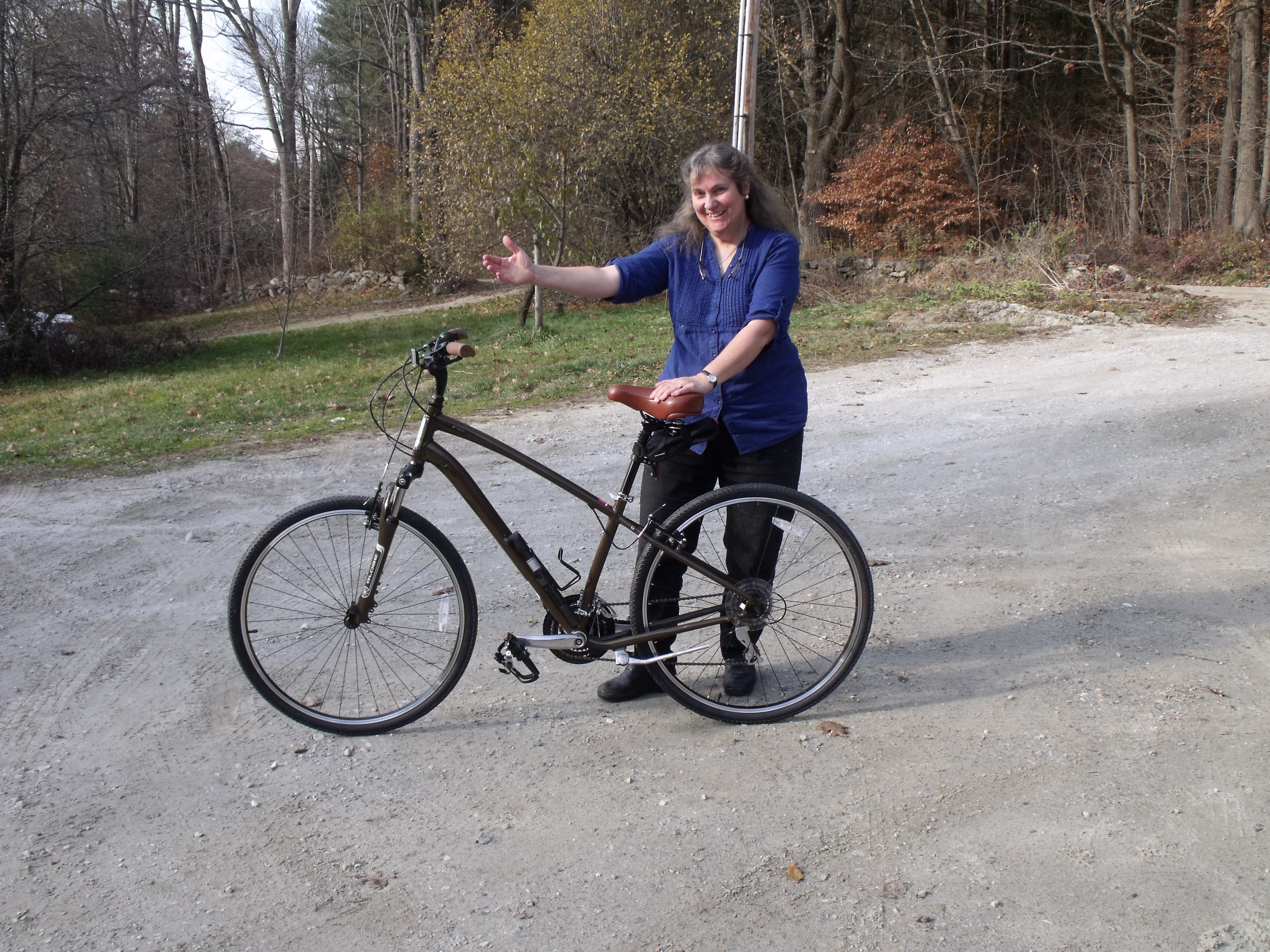
And here she is!

As promised, here is a picture of my new bike, as yet unnamed. It is also a ‘before’ picture to which we will look back and marvel. With God’s help I will stop thinking like a 30 year old and live like a healthy middle-aged woman, watching what I eat and drink, and getting enough sleep.  And exercise!  As long as I can get outside daily I’ll be all right.

It’s those dark winter days where things fall apart.  One day at a time, I think, and each day nearer to the ‘after’ picture.

Posted in Biking, Stories of Home | Tagged , , | 4 Comments

Forward Motion

This week my students and my daughter are studying Inferences of Categorical Statements in Logic, taking a midterm on all the declensions in Latin, writing a paper on what they would be willing to work two years to accomplish, doing messy things with fractions in Algebra, preparing to discuss the wisdom of using force against the protesters of Occupy Wall Street, and exploring science fair project ideas.  In recent weeks some parents have told me the challenges they were facing at home with this work kept them from doing a good job with some of it.  Ha!  It is hard stuff! I encouraged them not to feel they are failing when they don’t master everything in the program.

I see Challenge B as a messy, awkward, improvised dance. Some weeks it looks positively elegant and some weeks it is punk–all chaos and broken rules.  But I imagine this dance taking place on a cruise ship–all the time we are making forward progress! Having just studied Einstein this makes sense to me: we feel like we are stock still but relatively speaking, we are moving forward.

In another way I am under steam: yesterday I bought myself a bike. When I got a bike for Christmas 1976, it was a Raleigh road bike–ram’s handle bars, slender tires, boy’s frame.  As much as I have loved this bike, it has been no fun to ride lately. The Bartonsville Bridge was on my regular riding route, but now that it is out I have to share the dirt road with heavier–and faster–traffic.  Sand flung by the tires coated my chain and gears and the dérailleurs started misbehaving. Riding became a chore.  Not anymore!

I took it out today for a short ride, taking it easy after yesterday’s three hours of bike testing.  But it was so sweet to ride, I stayed out for an hour. I added another two miles to the trip because when I came to the driveway I didn’t want to stop riding yet. That’s never happened before.

This hybrid is huge. I sit high, like on a penny-farthing.  I like it.  I love the Shimano gear system. I like my new pedals (with toe clips) and stiff shoes. The wide seat is a significant improvement.

While I am more comfortable than I was on the Raleigh, it is not a better looking bike. It’s mud brown instead of insect blue (prettier) and bulky. And as I tested the bikes and realized I couldn’t find another bike that fit better than this one, I resigned myself to buying something called a “Specialized”. What kind of name is that?  I can’t see myself saying with pride, “Yeah. It’s a Specialized.” Oh, my Raleigh, the heights from which I have fallen!

Claremont Cycle Shop gave me a good deal on it and on some accessories. They were so kind to me, a newbie to the modern bike scene.  Serendipity–the young man who helped me first is the son-in-law to a Classical Conversations friend in Bartonsville, whose youngest son is my youngest son’s best friend.

I can’t wait for tomorrow’s ride!  I’ll get a picture to post. That blur will be me, moving forward!

Posted in Classical Conversations | Tagged , , , , | 2 Comments

Signs of the Season

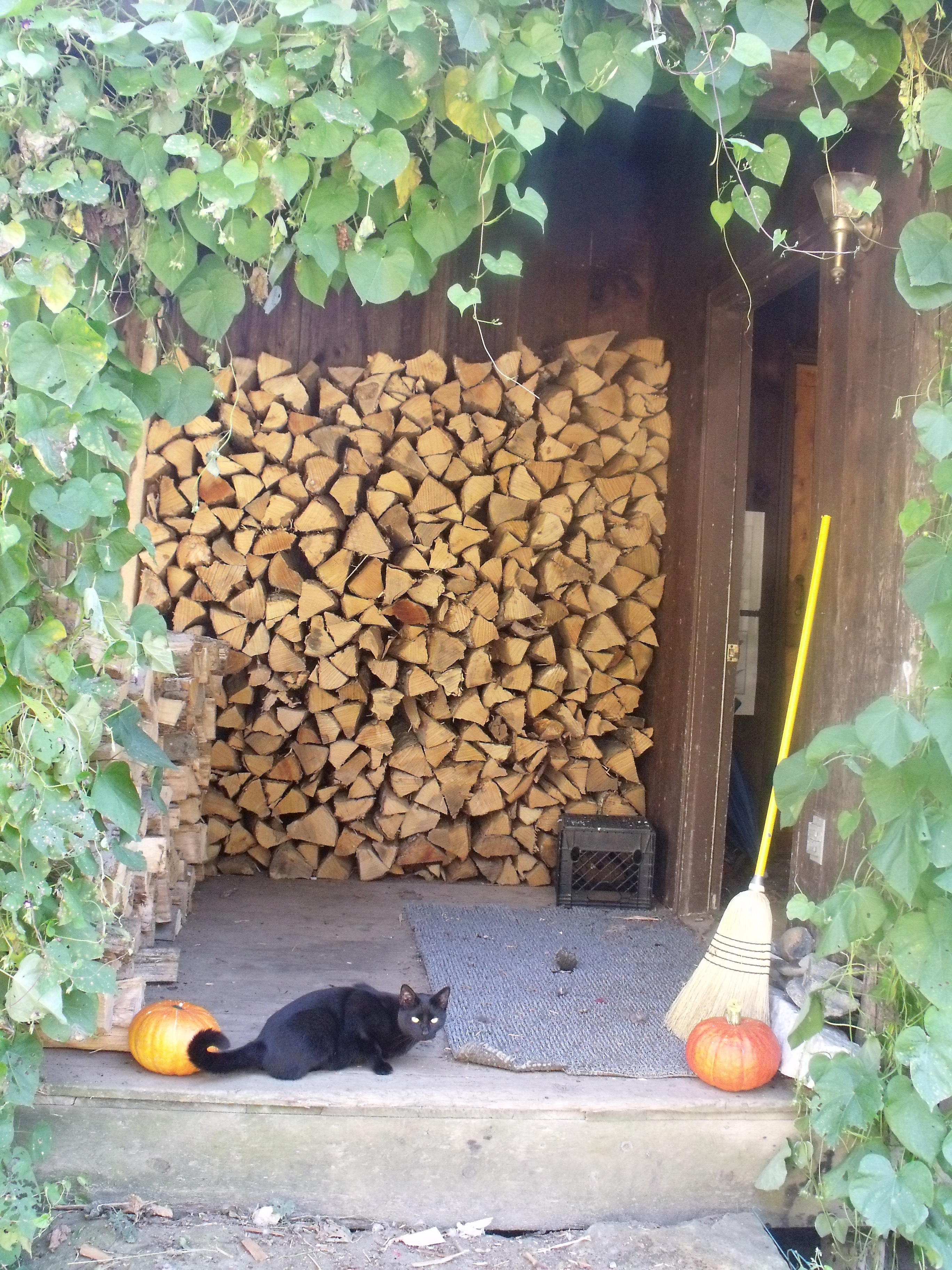
After stacking wood on the porch and cleaning up, I noticed this tableau.

Posted in Stories of Home | 2 Comments

Whether We Will Weather the Wild Weather

Robbo says we in New England live at the end of a weather funnel.  Weather from the southern US and from the west converges on our region, like water going down a drain. At the Montshire Museum in Norwich Vermont I saw a map with the tracks of countless storms over a century, and it really is true–the Exit sign is over New England and they all leave their trash at the door.

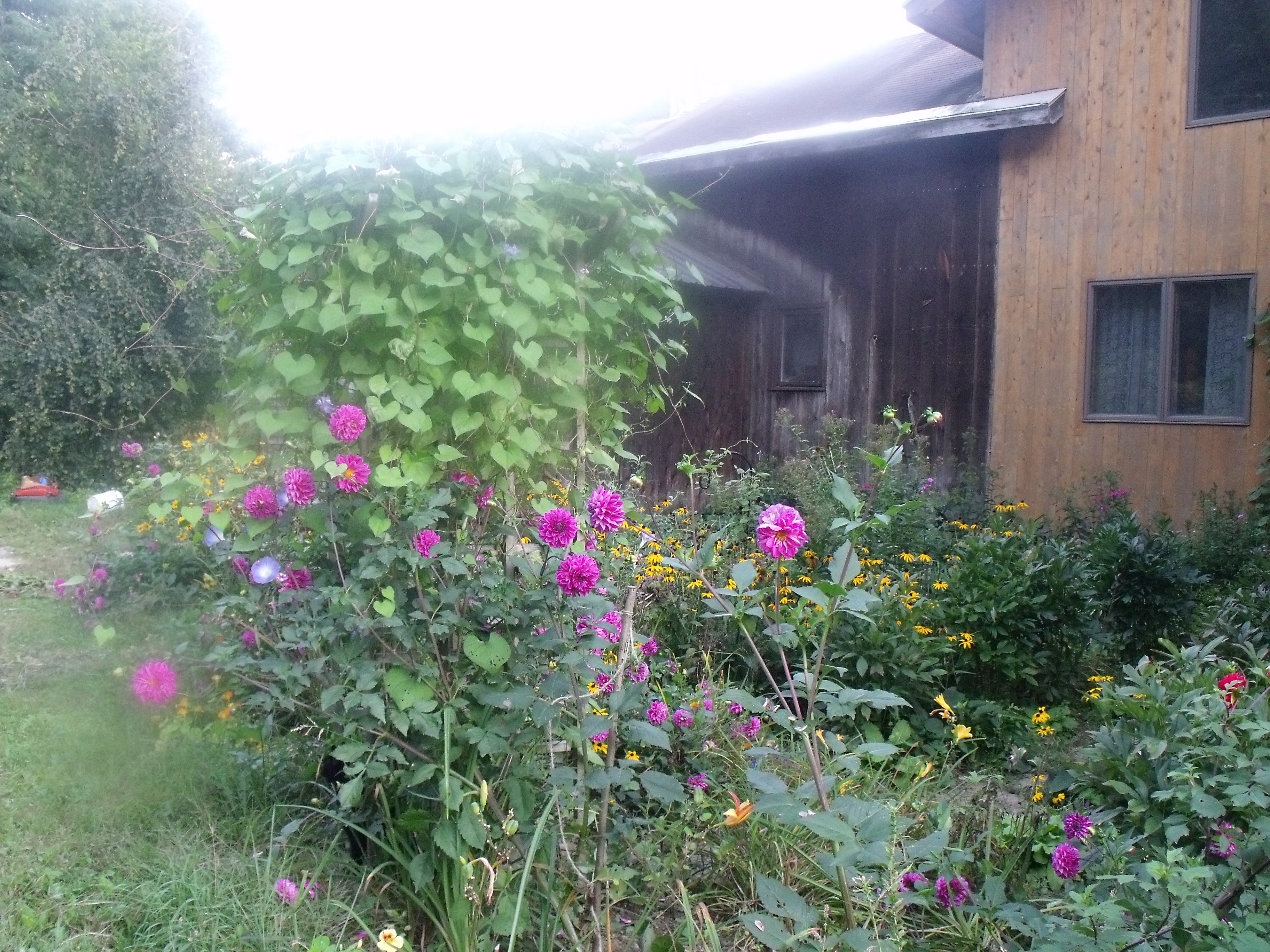
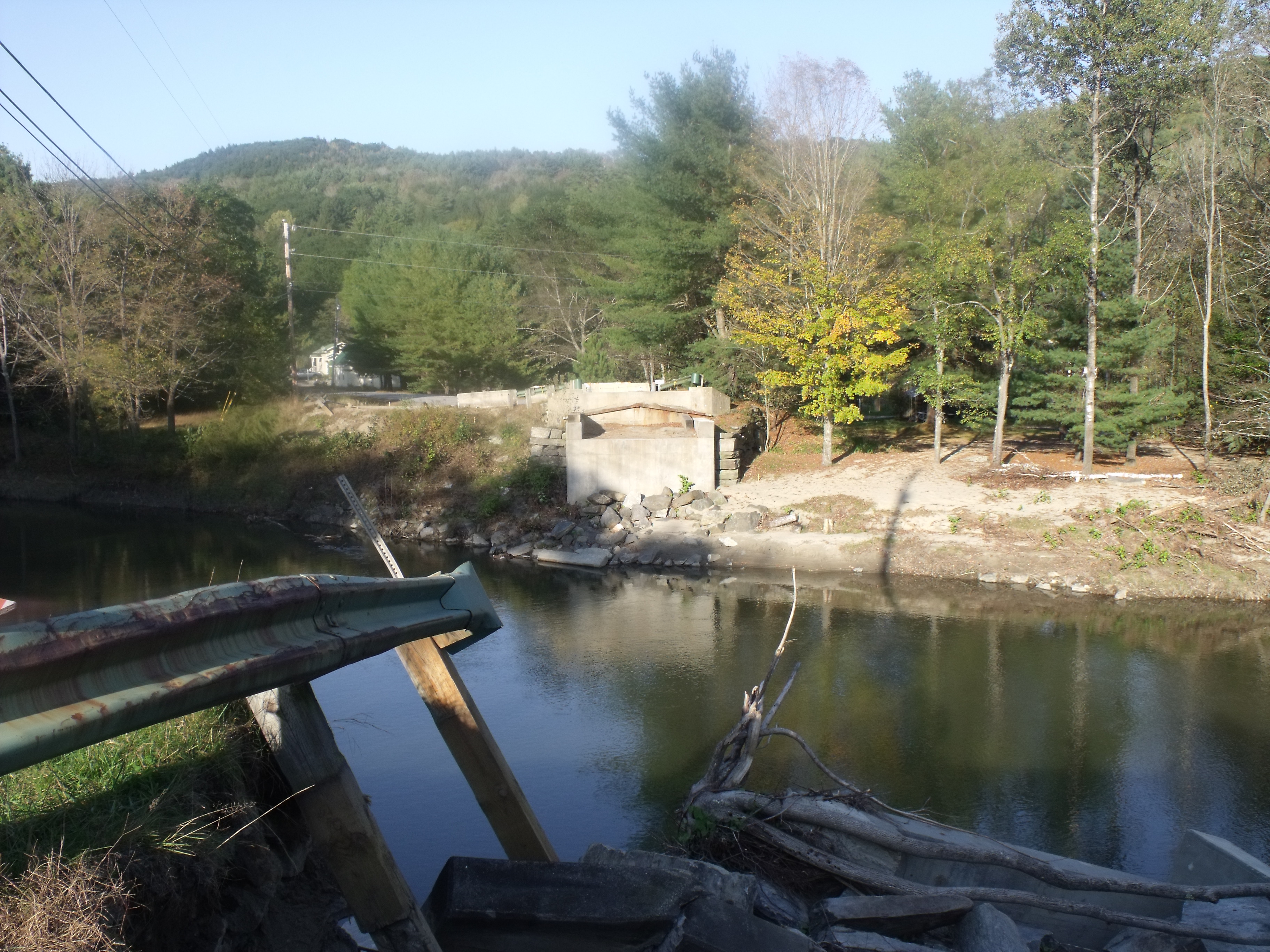
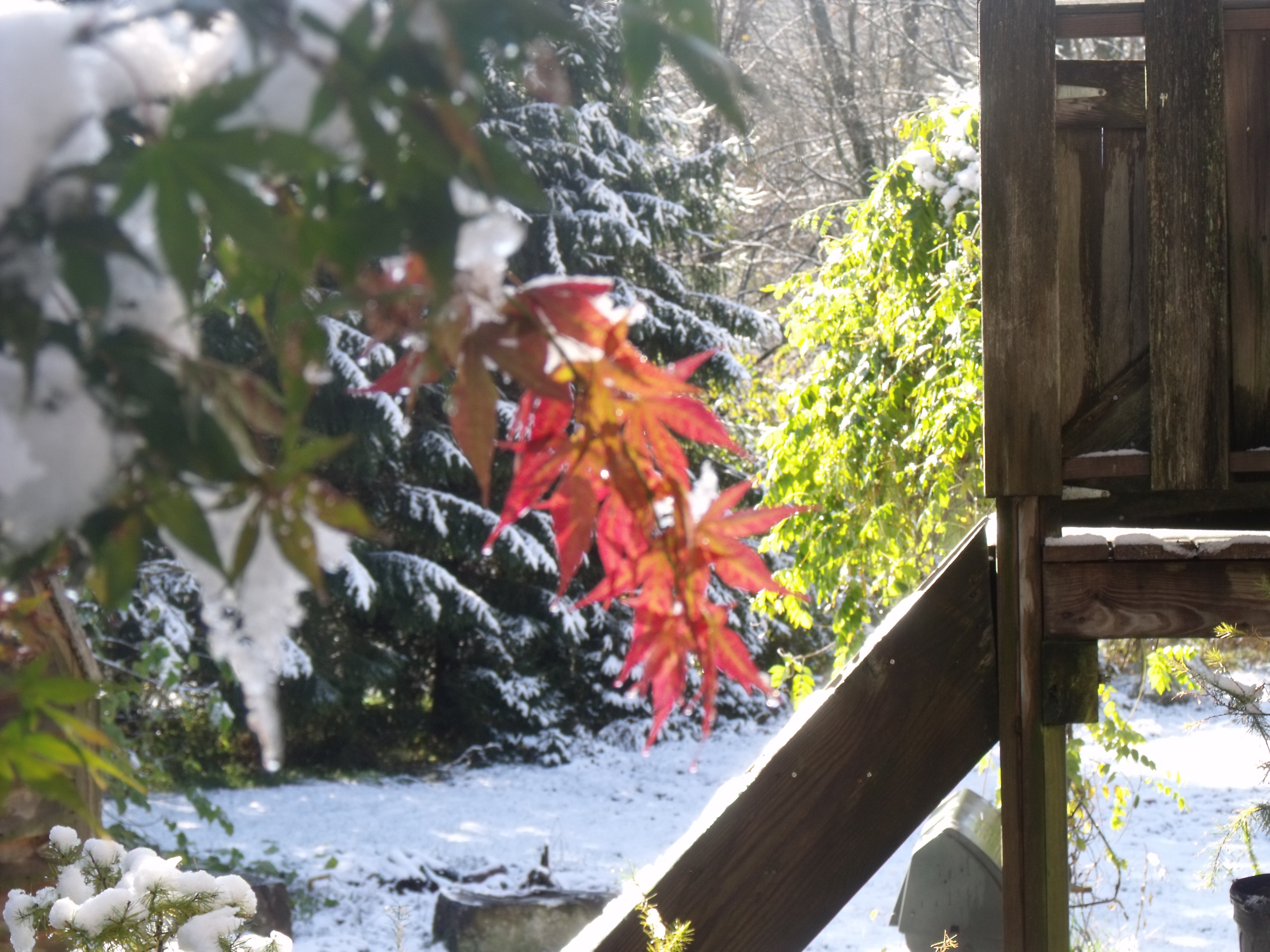
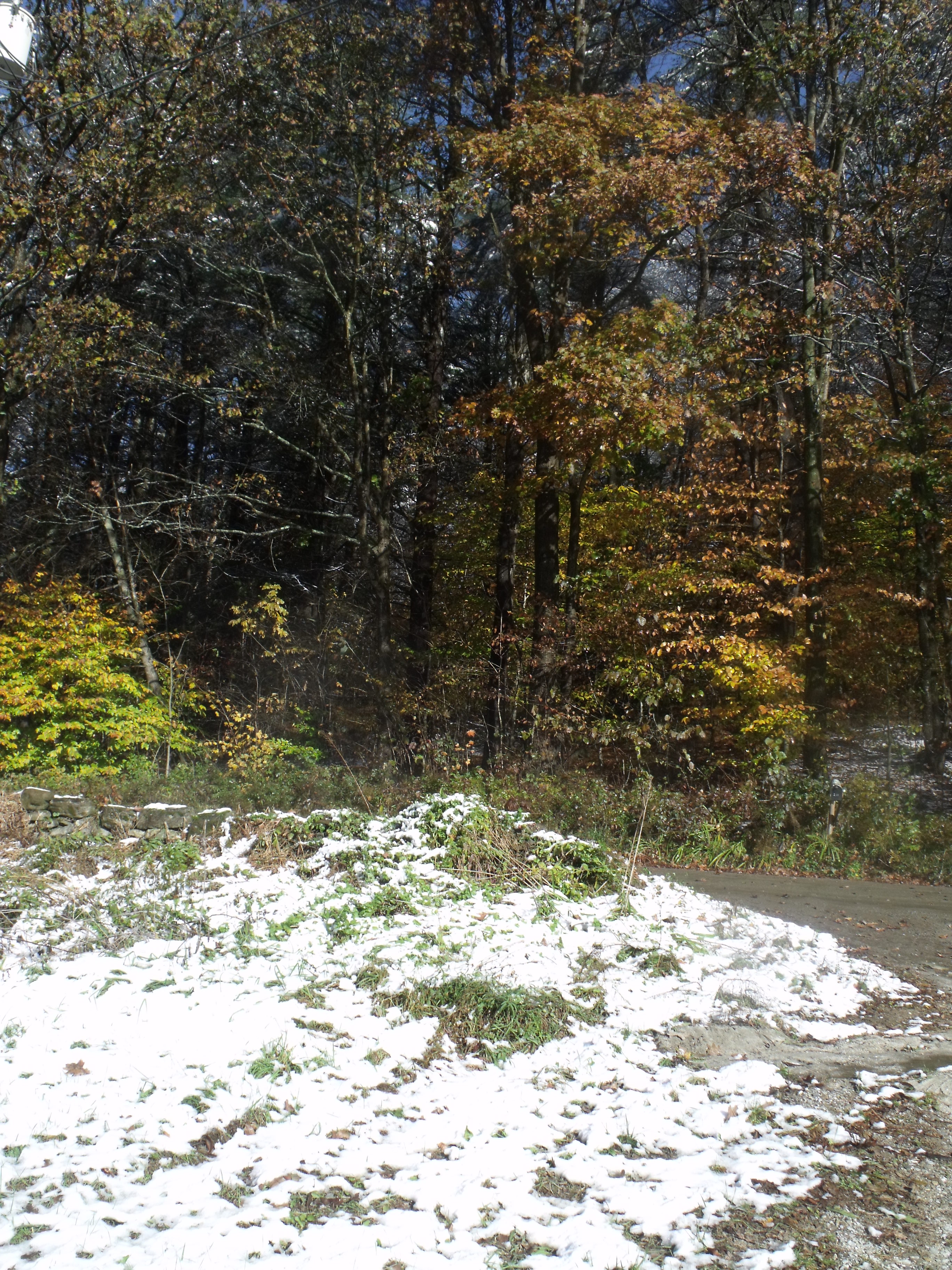
The moist summer nourished my garden.  Then Irene took our bridge. This week we got our first dusting of snow, very early, and last night our first winter storm!

Dahlias and morning glory trellis

View across my cottage garden--dahlias and morning glories on the trellis

Gap across the river

The Bartonsville covered bridge is gone.

maple leaf with dusting

We don't usually get snow until we have shut off the color and moved to black and white.

beeches and snow

The oaks and beeches are in full color for our first snow fly.

night shot storm

In preparation for the storm I put my garden to bed--dug up dahlias and took down the trellis.

Morning after Oct storm

The day after the storm. Just yesterday it was autumn!

Posted in Stories of Home | Tagged , , , , , | 1 Comment