Still Growing Healthier

A month later I am down 11 pounds and doing well. I feel full of energy and my thoughts are much clearer. How do I know? In class yesterday, before nine smart teens and in close proximity to the IQ-dropping whiteboard I was able to think through a Goclenian sorites and bring up from the depths of my Challenge B memories the notion of “self-supported statement” to answer a question. Yeah!

Some lovely feasts this week have kept me from losing but I haven’t gained. Moving forward! I’ll post Before and After at the end of my second 30 day.

Today I sat my kids down and gave them journals. Tomorrow they will weigh and measure so they have Before data. We’ll take pictures. I had them write down how they feel now and write over the next few months any improvement they notice. They have been on shakes for a few days. One wants to do the cleanse; others want the Ionix, which is full of adaptogens.

I ran a 15 minute room-cleaning blitz and rewarded all with an Isagenix chocolate. The one whose room improved the most got an Isalean bar too. And now we all have cleaner bedrooms! Win win win.

Posted in Stories of Home | Leave a comment

Taking Control

Ten days ago I signed up for the Isagenix Presidential Pak and three days ago started the 30-day Cleanse. Already I feel better–I’m not kidding. No doubt it has to do partly with not having sugar. But it also feels so good to be running lean, without the frequent snacking. Roasted salted almonds in particular. I like the taste of the shakes. I can start to play with additions when I want a change, but right now I like them the way they are.

We’re expected to take a small snack between the three meals, but I find I need a second snack in the afternoon.

The Ionix Supreme knocks me out for a deep night’s sleep. It has many of the same herbs I was taking for adrenal support and it delivers that same punch; within twenty minutes of ingesting it, my brain slows and suddenly the pillow is singing a siren song.

I think there are many other people like me who are desperate to lose the weight in a sensible manner for whom Isagenix will be a good fit, as it is for me. It’ll be easy to recommend it if people around me see the change over time!

I have tried other approaches but nothing fit me. This does. Some reasons:

  • I only need to prepare one healthy meal a day.
  • My other meals are prescribed.
  • I like the taste.
  • They have the same herbs I have learned are appropriate for me.
  • The protein-carb-fat components are sensible.
  • It doesn’t use fake sugar; if it does, I can’t taste it.

I don’t like the cost. It is a bit of a sacrifice but I have rearranged our budget because this is important. Some of it can come from my grocery budget.

Every time I ask myself what is the one thing that would change my life significantly for the better, I have the same answer: lose the weight. Live the rest of my life appropriately slender, as I was until I had my six children. Feel lean and healthy. It comes down to that.

It feels good to be finally acting on it in a lifestyle I can sustain for the long term.

I promise to post Before and After when I have something to show you.

Posted in Stories of Home | Tagged , , , | Leave a comment

Introductory Letter to My Challenge III Class

For our first class in August 2014, I requested each student write a letter about themselves, answering questions about their history and their favorites. In cleaning off my desk today I found my own letter. 

Dear class,

Thank you for sketching your character so I may have a glimpse from behind your eyes. I will return the blessing.

So. I was born on Long Island and grew up in Connecticut, where in kindergarten I met my future husband. In high school I had no idea what I wanted to do and made my physics teacher laugh when I told him I wanted to be an astronomer. I have always been partial to the outdoors and thought maybe something with plants would be my future. In my senior year I took AP Biology and also played Maria in West Side Story. At the same time, I took Music Theory, which I absolutely loved.  I was also teaching myself to play folk guitar. I did so-so in Biology. Okay, so then I knew—plants out, music in. I went to college in Connecticut for music, taking the Music Education path because I was not intense about practicing. I just wanted to learn more, much more about music.

So that I did, especially loving theory (no surprise), and graduated in 1981 with a license to teach music. I moved to Maryland, where I was interviewed by the county school system. After many adventures, the next year I was teaching elementary music, K-6. That is what I did for the six or so years I was there (while Ronald Reagan was president).

In 1988 my old kindergarten buddy, who had become a forester, persuaded me to leave the congestion of Maryland and make a home with him in the hills of Vermont. I gladly came. We lived in a one room house with no plumbing, power, or phone. Not for long though—once the ground thawed we put them in. I can remember the thrill of hearing a refrigerator hum!  No more daily trips to the store! And water—now we could wash dishes daily!

Six children were born to us and I started to teach the first one in 1994. He has just graduated from engineering school and lives in Vermont—like his parents, his roots go deep in the Connecticut River valley. The second is still in college, another one starts this week, and my last three are in high school. (They have been in Classical Conversations since Foundations and will be much better educated than the others!) I tutored Challenge B for five years and am now seeing one of those classes  in Challenge III.  I would love to park right here for several years.

That’s my history. Now to finish with some favorites (in threes):

Books: The Guernsey Literary and Potato Peel Pie Society. Busman’s Holiday by Dorothy Sayers. Classical Rhetoric for the Modern Student.

Writing: my blog, in my journal, articles (though this is very painful. Writing is still not easy for me.)

Activities: camping, cooking over a fire, long bike rides

Quirks: I sleep with the window open as long into late fall as I can and as early as possible in late winter. My kids won’t let me go near used bookstores. My favorite cat would like to eat the other cats (I admire his panache.)

With warm regards,

Mrs. Holleran

Posted in Classical Conversations | Tagged , , | 3 Comments

My CD Album at Doorposts

It occurs to me I have never mentioned my album of Bible songs for families. Doorposts, a company I love, carries it.

http://www.doorposts.com/details.aspx?id=45

That’s all I wanted to say.

Posted in Stories of Home | Leave a comment

Mary’s Birth

Mary’s laughter echoes like a cry
of final tight farewells to empty walls.
Memories break the surface with a sigh;
remembrance pangs in heavy hollow tolls.
For seventy years, like magnets bound by force
of opposite attraction, sisters always knew
the other’s tugging presence in her course,
deep traditions mending them like glue.
Her empty chair, the gathering’s gaping hole,
the fading mark of her unique impress,
unbroken silence, ringing toll on toll,
but sorrow clings to hope in our distress.
We will not find her here, this empty room,
this hollow world as empty as a womb.

Aunt Mary, August 22, 1935-January 16, 2015

Posted in Stories of Home | Tagged , , , | Leave a comment

Rhetorical Devices Series, Part I: Overview

Here is my article, an overview of rhetorical devices, posted on Classical Conversations’ Writer’s Circle.

https://www.classicalconversations.com/article/devices-style-part-i-introduction

I’m not posting here so those who come here from that site will see new material.

I am really enjoying my study of stylistic devices and I am ready to start the next one, “Schemes.”

Posted in Stories of Home | 2 Comments

Rhetorical Devices

I have been having so much fun playing with rhetorical devices! Also called figures of speech, or stylistic devices, they fall in two groups: schemes and tropes. Tropes and schemes dress up our writing like nothing else.

Once our children understand grammar through study of English or a foreign language (Latin helps here tremendously), they are ready to focus on figures. Facility with figures comes with deliberate practice, though I have read the papers of students who use them unconsciously. (I delight in pointing them out to the writer!) Writers who read the best of writing gather up the wisdom and jewels of master writers before them.

How many rhetorical devices are there? It depends whom you ask. Figures of Speech: 60 Ways to Turn a Phrase covers a good many; Classical Rhetoric for the Modern Student teaches quite a few good ones that Figures omits. (Quinn only explains Greek-named devices. Classical Rhetoric covers those and more, such as irony, parable, personification, puns.) I am having a good time reading about rheotrical devices. I love reading the examples; there are some fantastic ones. They inspire me to try them in my own writing. If I have devices stored in my mind, and I have the time, then I have the tools to spice my speech. It isn’t always Art but it is always worth the practice. Practice alone leads to excellence.

If you are at all interested in schemes and tropes, see what The Visual Communication Guy has done! He has arranged common devices like a periodic table.  I would love to have this on my wall, if I had a spare wall (they are all bookshelves), but let none of us get the impression from his visual device that rhetorical devices are like Chemistry! I laughed when I read this in Figures:

Writing is not like chemical engineering. The figures of speech should not be learned the same way as the periodic table of elements. This is because figures of speech are not about hypothetical structures in things, but about real potentialities within language and within ourselves. The “figurings” of speech reveal the apparently limitless plasticity of language itself. We are inescapably confronted with the intoxicating possibility that we can make language do for us almost anything we want. Or at least a Shakespeare can. The figures of speech help to see how he does it, and how we might. [Quinn 2]

Follow me through a series of articles on figures of speech for Classical Conversations’ Writer’s Circle.  They should appear in 2015 January, February, March, and April. If you don’t remember the difference between schemes and tropes (as I could not until recently) and if you want to add some choice ones to your writer’s toolbox, check them out.

Can you spot a few in my post? Comment below. You don’t have to know the name for it–just point out where you think I was practicing.

Posted in Stories of Home | 2 Comments

Traveling the Mississippi with Mark Twain

Last night, when I read to the family from Life on the Mississippi by Mark Twain, we came upon a passage that made them erupt in laughter. I read it again a couple of times just to savor the choice morsel we had been served. Some background first:

Samuel Clemens had run away from home looking for adventure on the Mississippi River. He finally finds a steamboat pilot who will take him on as apprentice. Young Sam does not have any idea what he has gotten into. It dawns on him he is supposed to memorize every bend, point, snag, willow, woodpile, island, sandbar on the entire 1500 mile journey. After he experiences a bit of Mr. Bixby’s wrath over his forgetfulness, he writes everything down in his little book. That helps. One day, when Sam is feeling pretty good about his improved memory, the pilot asks him the shape of Walnut Bend. Samuel says he doesn’t know.

My gunpowdery chief went off with a bang, of course, and then went on loading and firing until he was out of adjectives.

I had learned long ago that he only carried just so many rounds of ammunition, and was sure to subside into a very placable and even remorseful old smoothbore as soon as they were all gone.

Oh, did that tickle us.

This autobiographical story holds us fascinated for a chapter or two after supper. Besides the view we get from the Mississippi in the antebellum south, we get to taste Twain’s superb writing skill. Let me share an example of “Show, don’t tell”. His boss is at the tiller, the pilot house is full of off-duty pilots. Pressure is on to get the steamboat past Hat Island before dark or they’ll have to land for the night. If they can just get past the treacherous shoals around this island they will have open water, where they can continue through the night.

So there was a deal of looking at watches all the rest of the day, and a constant ciphering upon the speed we were making; Hat Island was the eternal subject; sometimes hope was high and sometimes we were delayed by a bad crossing, and down it went again. For hours all hands lay under the burden of this suppressed excitement; it was even communicated to me, and I got to feeling so solicitous about Hat Island, and under such an awful pressure of responsibility, that I wished I might have five minutes on shore to draw a good, full, relieving breath, and start over again. We were standing no regular watches, Each of our pilots ran such portions of the river as he had run when coming up-stream, because of his greater familiarity with it; but both remained in the pilot-house constantly.

An hour before sunset Mr. Bixby took the wheel, and Mr. W. stepped aside. For the next thirty minutes every man held his watch in his hand and was restless, silent, and uneasy. At last someone said, with a doomful sigh:

“Well, yonder’s Hat Island–and we can’t make it.”

All the watches closed with a snap, and everybody sighed and muttered something about it being “too bad, too bad–ah, if we could only have got here half an hour sooner!”–and the place was thick with the atmosphere of disappointment. Some started to go out, but loitered, hearing no bell-tap to land. The sun dipped being the horizon, the boat went on. Inquiring looks passed from one guest to another; and one who had his hand on the door-knob and had turned it, waited, then presently took away his hand and let the knob turn back again.

 The thing with the doorknob. Can’t you just see a film director focusing on that hand on the doorknob, creating tension, setting up expectation for the amazing feat that follows?And it is amazing, as Mr. Bixby pulls it off in the dark with high stakes if he misses: $250,000 ship and cargo, and 150 lives. His feat is talked about for years after.

I highly recommend Life on the Mississippi by Mark Twain. It is a relatively short book. (Just eyeballing it, I would say three of these could fit into Huck Finn.) Two of my children are studying American History in the Classical Conversations’ Challenge III program and we find this story gives flesh to the antebellum culture.

And the lively language takes an easy journey into our souls where it will return someday in our own writing, uniquely our own but owing honor to the master.
Posted in Classical Conversations, Stories of Home, Writing about writing | Tagged , , , , , , , , | Leave a comment

Anyone can write poetry

I want to write. When I write well and that magic thing happens, that long silky ribbon of of words that surprises even me, my soul sighs, profoundly content. It is like the winter yearning of my friend Aula to get her hands into fresh soil of her garden, the restlessness of Suzy to paint when she has instead to tend her Bed and Breakfast.

For over twenty years I wrote the family’s Year in Review in poetry form. I began by writing rhymed doggerel, working for a wry grin. I used iambic tetrameter, until my life wasn’t funny anymore and I needed a form to fit the content. “We dug a hole and laid him in; I miss his drooling, furry grin.” Oh, please.

So, I began to write in blank verse, unrhymed iambic pentameter. Here is a sample:

No one knows I’ve holed away to hide
in Robbo’s office, where the muted chirps
and domino-falls on carpet overhead
barely touch my ear; solitude’s
a woodstove’s fire when outside chores are done.
In respite long enough to spin my thoughts
into sentences, I dwell upon the year
Twenty-Ten, and tell a tale or two.
So, friends and family, now may I present
the folks that make the news at Heart’s Content.

That was in 2010 and a long time ago. I think that was the last time I wrote a letter to send in our Christmas card; all my energy has gone into tutoring Classical Conversations’ Challenge B and teaching my own children. But since then I have feasted on a banquet table of poetry and poetry books, and I feel my courage rise. This year; this year, for sure.

Two books lately have been my food. Both are short and both invite to the reader to come out and play. One teaches the reader how to read poetry, and the other to write. They are How to Read a Poem by Tania Runyan, and The Poetry Home Repair Manual by Ted Kooser.

How to Read a Poem simply goes slowly through Billy Collins’ poem “Introduction to Poetry” and teaches the reader how to see the images of a poem, listen to the sounds, scamper through the lines and spaces. She includes poems at the end of each chapter for the reader to enjoy and to practice on. I feel comfortable and welcome here. I have a stack of books about poetry–and two stacks of poetry collections–but this is the first that has me believing I am truly welcome in the land of poems. No prior knowledge needed.

The second–oh my. The Poetry Home Repair Manual makes me think I can actually learn to write and write well. Kooser writes as if anyone can try his hand at writing poetry. His advice is rich and profoundly helpful. This is the book I would give writers who are yearning to put words to paper.

Kooser, U. S. Poet Laureate (2004-2006) says, “Poetry’s purpose is to reach out to other people and to touch their hearts. If the poem doesn’t make sense to anybody but its author, nobody but its author will care a whit about it.” [Kooser xi] He quotes Seamus Heaney, “The aim of the poet and the poetry is finally to be of service, to ply the effort of the individual work into the larger work of the community as a whole.” [page 6] Service! Poetry is meant to delight the reader and give her eyes to see something that will make her life richer, better.

I learned a couple of things I have immediately put into practice: read poetry widely and regularly a few minutes a day, and get apart in solitude to put pen to paper. I can’t tell you how relieved and encouraged I am to hear how others, like me, wonder what to write about. I know what I have been doing wrong! A poem doesn’t start with an idea, such as, “The internet is ruining my family,” because ideas “are orderly, rational, and to some degree logical….Instead, poems are triggered by catchy twists of language or little glimpses of life” [page 14]

I know when I retreated to a quiet corner this weekend and began with the image of beech leaves, brown on the edges like baked sugar cookies, I found heat in my soul and the scent of something baking in the oven.

Posted in Poetry, Writing about writing | Tagged , , , , , , , | Leave a comment

A Day Away from Gadgets

When I was a girl growing up on the wild edges of a civilized town on Connecticut, I roamed the outdoors a lot. My Dad is Remington man and gave us a wholesome appreciation for creation, whether flora or fauna. It was no surprise to anyone that I married a forester and helped him build this house in Vermont. What is a surprise is that our kids are glued to their computer screens and some consider going outside akin to going to the dentist. In the fleeting beauty of this fabulously gorgeous day, I determined to make memories.

Sunlight, trees, and sky have our complete attention.

Sunlight, trees, and sky have our complete attention.

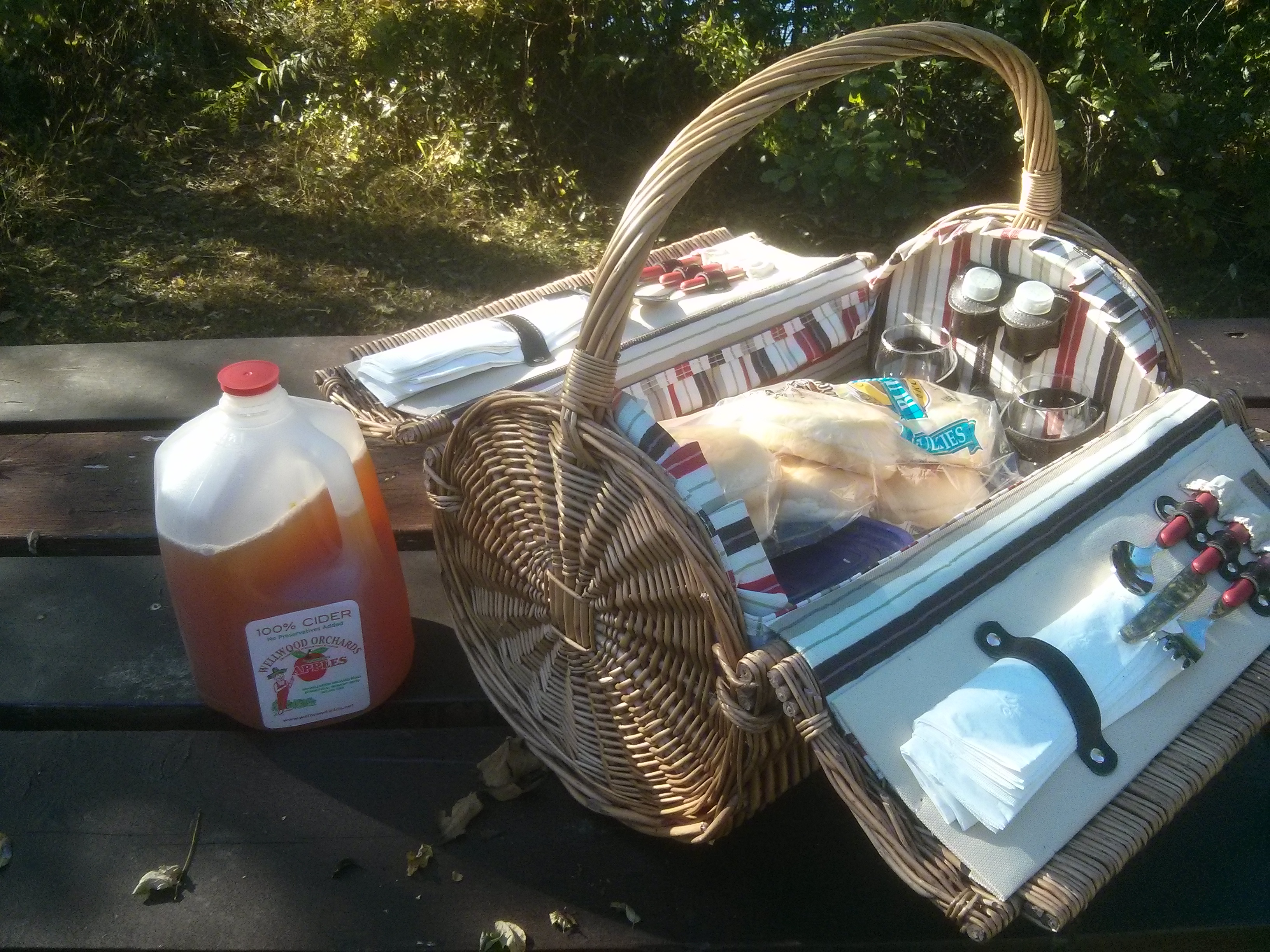
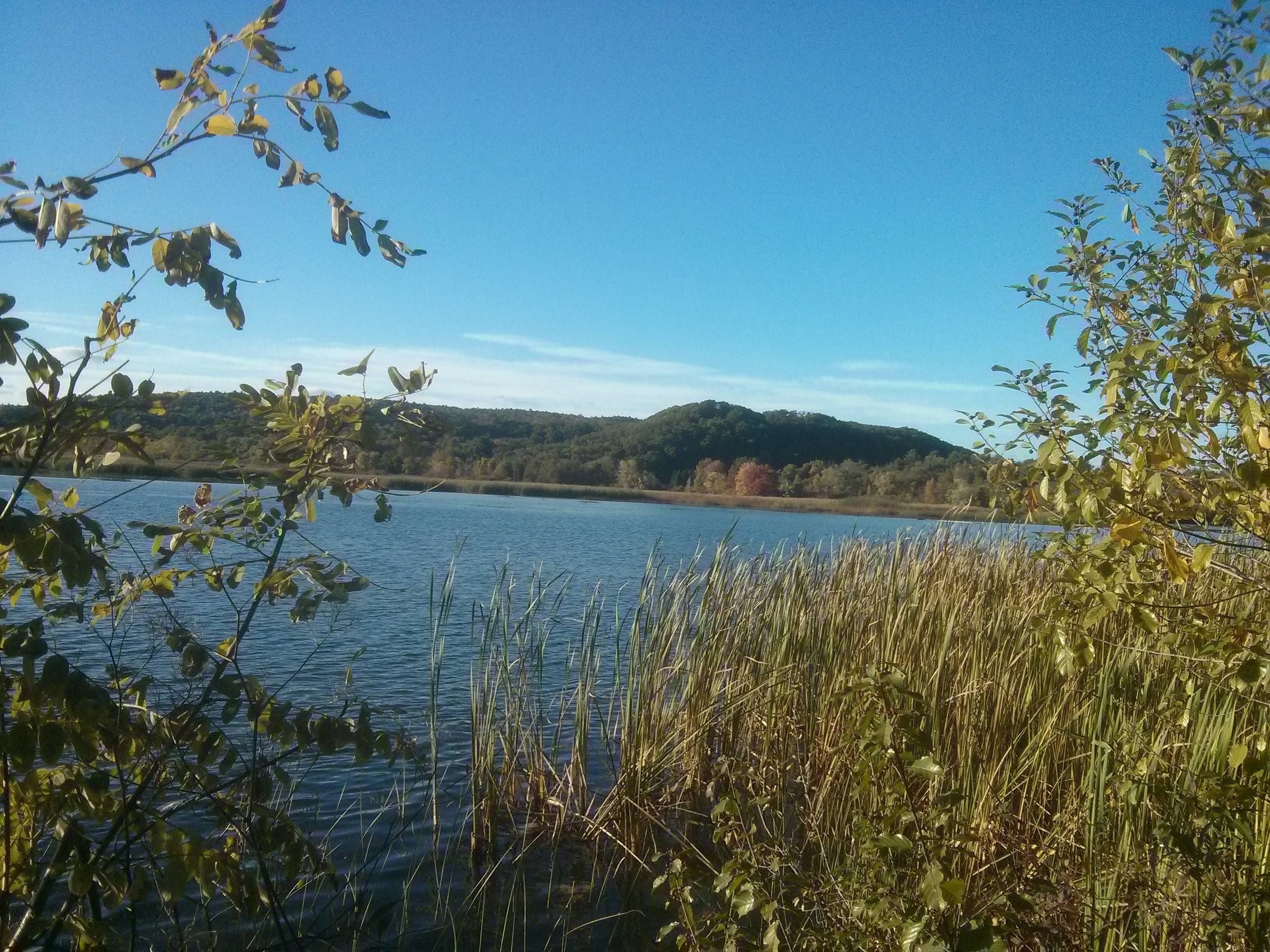
We spent the afternoon along the Connecticut River with a picnic lunch.

Picnic basket and cider

Pulled pork on bulkie rolls, coleslaw, and fresh unpasteurized apple cider.

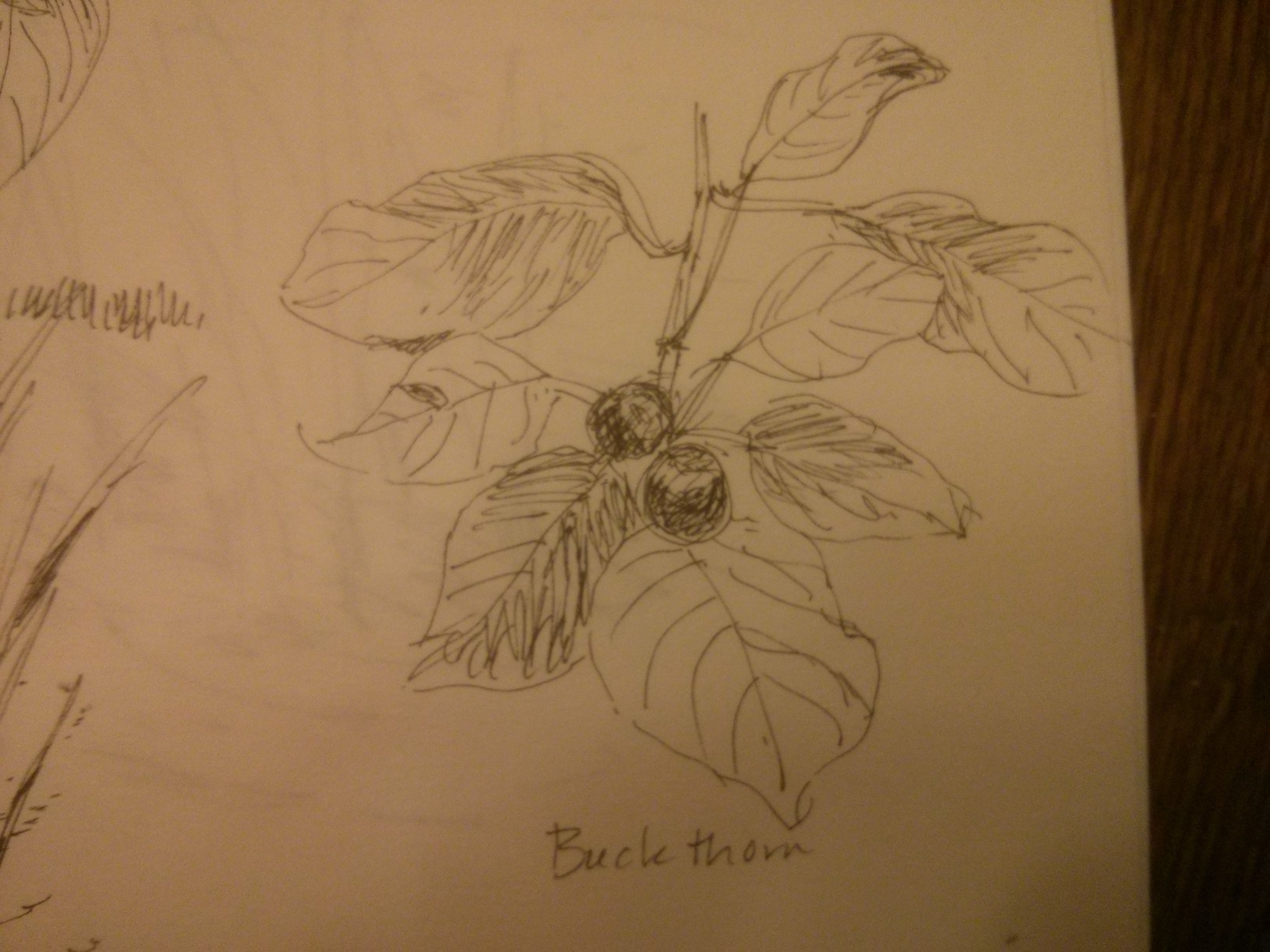
After we had our late lunch, Robbo put the canoe in the river and fished, Sylvia worked on her art assignments in the car, the boys toasted marshmallows, and I sketched in my nature journal.

2014-10-05 16.48.31

The Connecticut River setback, where in early morning Robbo hunts waterfowl.

Buckthorn

Buckthorn

What a perfect choice that turned out to be!  We came back refreshed and energized. Screens suck life from us; nature nurtures us back to life.

It really is beautiful in Vermont right now and I don’t want to sound ungrateful, of course, but fall is bittersweet, like the family feast after a funeral, followed by the widow’s desolation. Winter comes. From mid-January to April some of us will be miserable. Against the dark and the raw cold all we can do is hunker down and endure. I do confess, those are dark times for me.

But fall’s sweetness is in its fires. It is chilly, so my husband makes a cheery fire in the stove. Fall exhilarates me (aren’t we funny creatures!) because its minor chill threatens our comfort and we feel so strong and wise as we fight back with heat. Add to that the thick, aromatic soups and breads–and fresh apples–and fall makes us feel like a hardy race.

My first fall in Vermont, after having lived in Maryland for six years, came too soon, and I panicked. Not winter again! That year I started a list of the benefits of winter and discovered many. I realized until Christmas all is well. (Winter kicks in mid-January and doesn’t let up until near the end of April. Fresh green leaves appear the first week of May in my valley.) No bugs. No garden chores. Good food (maybe too much of it…) and time for social visits. In the long dark evenings we read aloud to the family.

My ideal winter would include daily adventures and broken gadgets. How do you handle the lure of the internet in your home?

Posted in Stories of Home | Tagged , , , , | Leave a comment