Passing up Frank Sinatra for Euclid

This morning I read an exuberant article about the delicious wordsmithing of the songwriters for the old crooners, namely Frank Sinatra.  http://www.worldmag.com/2014/08/rhythm_and_rhyme  My son Barnabas, whom I just delivered to St. John’s College in Annapolis, gets a kick out of Sinatra. He also enjoys word play and writes engagingly. I shared the link immediately.

But his return email to me, hours later, reminded me he is too busy for these unimportant asides. He texted, That looks like a really good article. I’m buckling down this afternoon with a couple of Greeks, so I’ll have to check it out later.
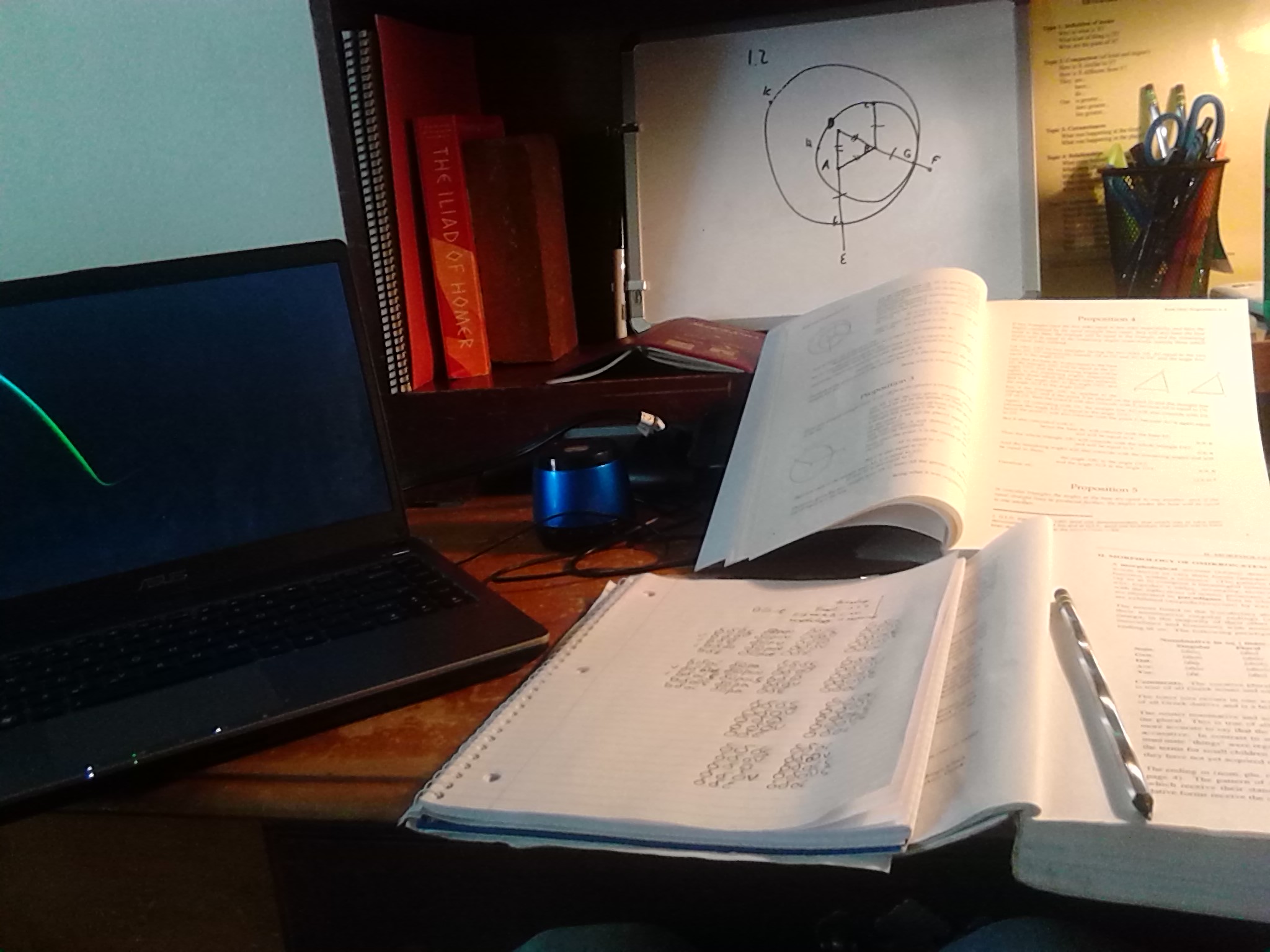
Euclid's Geometry and a Greek textbook.

Euclid’s Geometry, Homer’s Iliad, and Greek textbook.

Yesterday we had our first talk since I left him there on August 20th. His years with Classical Conversations and the Mandala Fellowship prepared him extraordinarily well for the St. John’s experience. Not only is he familiar with civil discussion, but thanks to his Latin study, Greek is familiar. During his year in the pilot quadrivium program he had plenty of Euclid. He has already read and enjoyed the Iliad on his own, so now he finds it easy to dig deeper.

And as for distractions, he realizes there are frequent social events, so he doesn’t worry about losing out while he studies. He focuses on his lessons knowing he can find something to do when he is on top of his work.

I was glad to hear it. Am I the only homeschooling mother who thinks she really messed up her kid and ruined him for real life?? I think not! I especially regret how much I didn’t do to restrain Internet distractions. My own productivity and creative efforts have been cramped by all I can or have to do on the Internet. It appears Barnabas has created some internal rules to live by.

I feel much better about his ability to handle himself as a man on his own. No small part of that belongs to his classical education, which for Classical Conversations is ultimately about developing virtuous character. I think he is going to make it!

Anyway, this homeschooling mother is sleeping better these nights.
 

Posted in classical education, Stories of Home | Tagged , , , , , , | Leave a comment

The Seven Laws of Teaching

Let’s see. I entered Kindergarten at four years old, and except for six early years of my marriage, I have been on the school schedule ever since. My friends, that is a total of 44 years. I reel.

Twenty years ago I started formal teaching with my then four year old, but the past five years have also found me leading seminar with a classroom of junior high students. I am both mother-teacher and classroom-tutor. While I am a veteran teacher, I have a lot to learn about teaching classically. Books help me here.

I am studying an abridgment of the classic The Seven Laws of Teaching by John Milton Gregory, published in 1886. The abridgment by Carl Shafer is titled Excellence in Teaching with the Seven Laws. While I usually prefer originals, this is a well-done condensation. Both explain the philosophy of the laws, state them as a positive rule, and describe mistakes teachers commonly make. Keep in mind these are not moral law, but laws derived from careful observation and testing, such as the First Law of Thermodynamics.

They are: The Law of the Teacher, Law of the Learner, Law of the Language, Law of the Lesson, Law of the Teaching Process, Law of the Learning Process, and the Law of Review.

The Law of the Learner, to give an example, states: The learner must show interest in the lesson. Stated as a rule it is: Gain and keep the attention and interest of your pupils. Do not try to teach without their attention. Dr. Gregory names distraction and apathy as the chief hindrances, and gives wise guidance to the teacher: Never begin until the attention of the students has been secured; stop when signs of fatigue appear; arouse attention by variety in your presentation; prepare thought-provoking questions ahead of time; kindle and maintain the highest interest in the subject; let them see your own enthusiasm. Good stuff, whether for classroom teacher or home school mother.

Each section also lists “Violations”, mistakes that rob our teaching of its power and effectiveness. I recognize one of them in my own home teaching: failing to help my children see the intrinsic qualities of a lesson, say on the Pythagorean theorem. What do I do instead? Quickly show them how to do it and compel them to get the work done. They’ll do it, grudgingly, but I would rather see them engaged. I notice we are much more satisfied when we sit down and explore the concept together.

I like this abridgment and keep referring to it this summer as I prepare. For more of the philosophy of each law, read the The Seven Laws of Teaching. Whether home school teacher or a Classical Conversations tutor, make a point of reading one of these somewhere in your career. We can move from being a pretty good teacher to a wise one that can profoundly influence our students.

Note: Shelly Stockton and I are recording short conversations on each of the laws. It will be posted in CC Connected, Challenge Tier Learning Center in late summer (2014).

Posted in Practical Tutor | Tagged , , , , , , | Leave a comment

Eating the Frog

Over the past year or so I have read several books about time management. Of course, it is not time we manage but ourselves, and I hear the authors say many of the same things, such as know what your overall goals are, plan your work before you begin it, block out distractions.

Last summer I studied Getting Things Done and set up Microsoft OneNote to capture and manage my tasks. That relieved me of the sense of being lost in a storm of undone jobs, not having a handle on what was important or what could be dismissed. In my lack of structure I neglected them equally. After a year of GTD, I can say I like this system. I capture all tasks in lists and manage them by assigning blocks of time. This summer I have it has been working beautifully.

I keep a digital calendar on my PC and my phone. Since I have made my health a high priority this summer, I have blocked out time for an hour-long bike ride each morning, two hours on Saturday. After cleanup and conversation about the day with my teens, I practice typing with Mavis Beacon for twenty minutes. (My chat box comments made me look likc i hda a speahc impdeimnet.) Then I eat the frog, but more about that in a minute.

Two hours a day are blocked out for tasks I do for Classical Conversations as a support to the program manager. During my hour lunch I include reading up on classical education. In the next two hours I work on my Latin and Math because I didn’t quite get to where I needed to be when the school year ended. Then, two or three hours are set aside for study for my new position next school year as a Challenge III tutor. (I have been directing a Challenge B program for five years. This means I move up from 8th grade to 11th grade.) During these blocks of time I handle the outstanding tasks in that category, closing out tasks as I complete them. Yay!

If I had a teen make supper, I just waltz into the dining room for the dinner hour.

Now, about that frog. This is the best thing I have heard in a while. Mark Twain said, “If it’s your job to eat a frog, it’s best to do it first thing in the morning. And If it’s your job to eat two frogs, it’s best to eat the biggest one first.” So, my Eat That Frog hour (a green block, of course) starts off the day. I do the nastiest jobs first: bills, calling state agencies on behalf of my father-in-law, getting paperwork off to my son’s college. It is out of the way, and then I can begin the next work block with that off my mind.

It is rare that a day works out exactly like this. I often have to do errands with Grandpa (my father-in-law) and I spend way too much time in my car. But when I am home I know what I am supposed to be doing and little by little the work gets done.

One last thing: all this is possible because my youngest children are now teens and have projects of their own. And if they don’t have a project, I give them one of mine! I could not have done this when I had small children. For those days I had Flylady!

Posted in Classical Conversations, Practical Tutor, Stories of Home | Tagged , , , , , , , , , | Leave a comment

Ten Things about Family Camping

On May 17 my oldest graduated from Vermont Technical College and the following Monday we loaded all six in a two vehicles for a week of camping at Acadia National Park. It was our first camping experience.

It was a sunny day here when we left but we drove into a nasty coastal storm, and I could see our sleeping bags in the truck bed being drenched with rain. We arrived at dusk, in the rain. The rangers were off duty, we had no dry wood, and my plan had been for supper to be cooked over a fire. What was looking ugly suddenly became magnificent as my offspring leapt into action, setting up the gazebo and three tents in cheerful efficiency. My husband found some wood and soon we had a fire. That was the beginning of what I learned that week:

1. The kids will rise to meet the challenge.

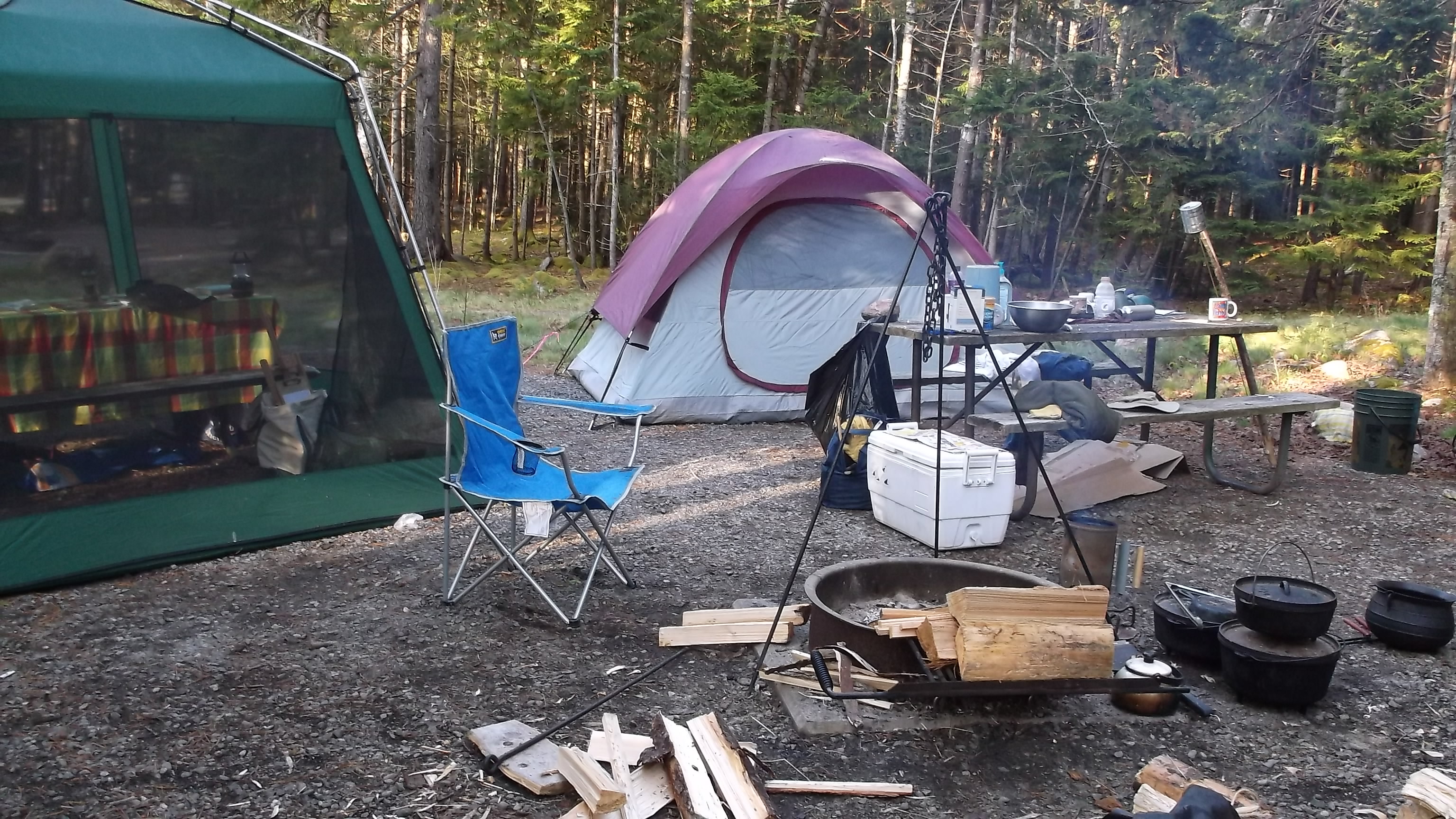
We set up the kitchen and communal eating area at Mom and Dad's tent site.

We set up the kitchen and communal eating area at Mom and Dad’s tent site.

2. The campfire is the life of the party. Even if you don’t cook on it, have a campfire for its warmth, its beauty, its snapping cheer, especially in the dark.

3. Start the fire first thing in the morning and heat water for hot drinks: coffee, tea, hot chocolate. As campers rise, it gets everyone started. Make breakfast after that.

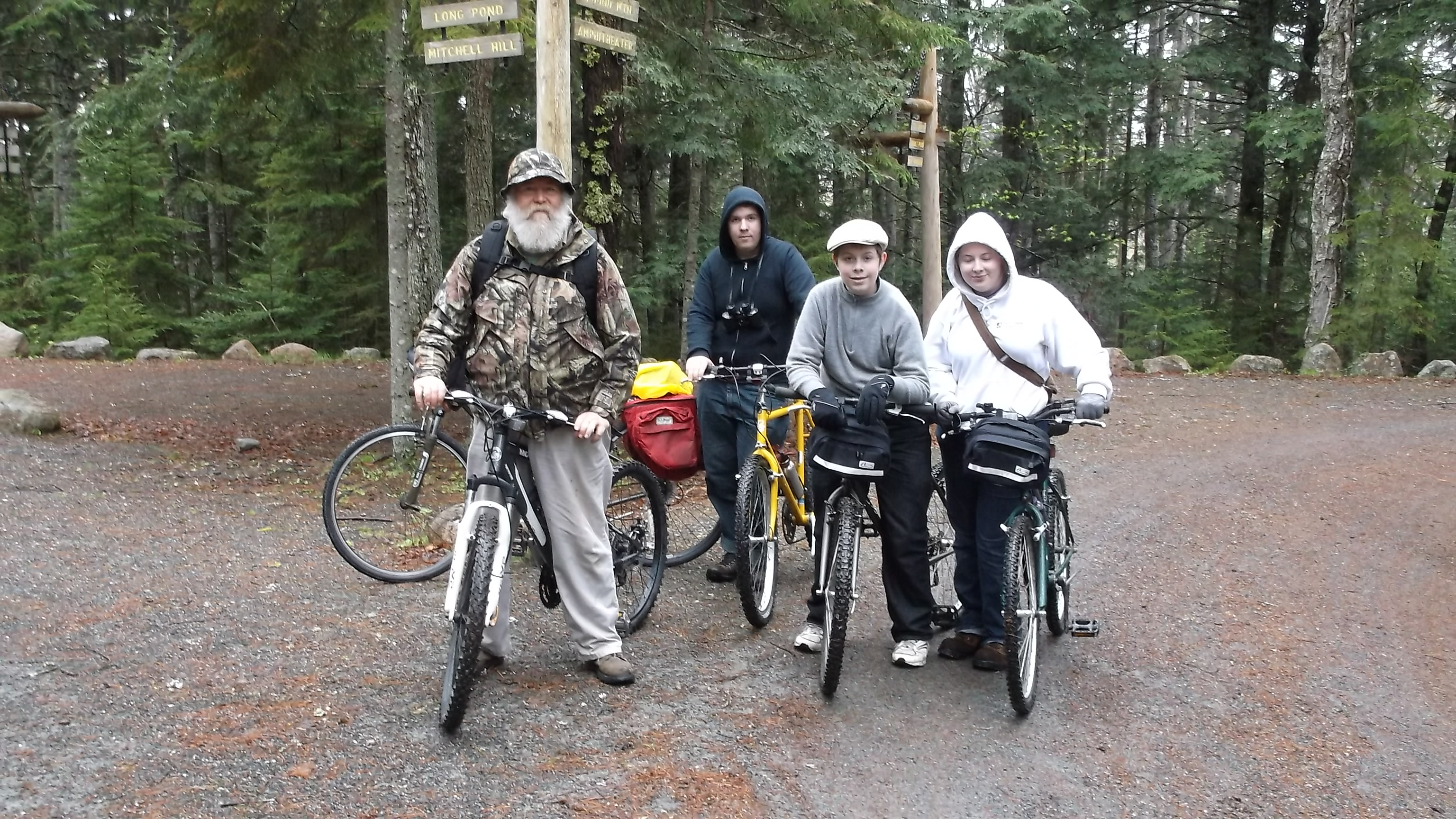
4. Camping puts the family face to face, without distractions of home. Everything we do, we do together as a family. That is rare for our home life. Good questions fuel conversation. What did you notice today? What would you like to do tomorrow? We split up in teams; some hiked, some biked.

We didn't let a little rain stop us from an adventure.

We didn’t let a little rain stop us from an adventure.

5. Pack ziplock bags with premade meal items, such as pancake mix (just add eggs, milk, butter), cornbread mix (ditto), measured oatmeal, chopped veggies for stir fry. We didn’t like handling raw meat; it was hard to keep sanitary or fresh. Precooked meat in a cooler with ice packs is better than dealing with raw meat. We did it, though; on day four we used ground beef that had been slowly thawing in a small cooler we called “the freezer”, kept cool with bottles of frozen water and ice packs. That was stretching it, though.

6. A fabulous meal: in a 12 inch Dutch Oven layer two chopped onions, a head of chopped cabbage, a can or two of sauerkraut, and 12 Italian sausages arranged like the spokes of a wheel over all. Salt and pepper. Bake at 350 with briquettes under and over (see this chart for exact numbers) for 45 minutes to an hour (or use wood coals and change frequently). Serves 6 or so. We decided we would add mustard to the sauerkraut layer next time.

7. Share the jobs. Everyone has a turn cooking, cleaning up, schlepping the waste to the bear-proof dumpster. Make it a vacation for everyone, even Mom and Dad. (I love cooking with my Dutch Ovens over a fire but I assigned teams to cook various meals so everyone could enjoy the satisfaction of serving a meal they prepared.)

8. Camping is about survival. Meals take intentional thought and a lot more time to prepare. How will we prepare it? How will we stay warm? What do we have to do to stay safe from the wild animals whose territory we’ve invaded? It makes us aware that these are not an issue back home. Thanks Dad; thanks, Mom.

9. Pads under sleeping bags just don’t cut it for middle-aged parents. We should have brought an air mattress for my husband and me.

10. Camping makes unforgettable family memories. Consider making a photobook. National parks gift shops are giving out coupons for free photobooks from Shutterfly this summer (2014). Have everyone upload their photos to Shutterfly. Make a photobook out of them.

We have decided unanimously to make this an annual event. What took us so long?

Posted in Stories of Home | Tagged , , , , | Leave a comment

Summer Semester

One month into the summer semester, and I have discovered again why I cherish it.

I have time for contemplation; my thoughts spin in long threads. My day is not quite as fragmented, because my teens are working, exploring, or otherwise employed; I am not constantly blipping them on my radar. In the morning before they rise, on long bike rides for exercise, or while pulling weeds in my perennials garden, I am thinking, carrying on a conversation about my reading.

I make time to read. During lunch hour I read from one of a stack of non-fiction, such as Beauty for Truth’s SakeThe QuestionA Sheep Falls Out of a TreeHow Successful People Think. I read on a bench in the garden. I read during a break for tea. I’ll plan a day vacation and bring a book or two to a lake to read while the teens take out kayaks and canoes.

I have time for meaningful work. Thanks to books I have been reading on managing work (Getting Things Done, Eat That Frog) I have a happy order to my day and I am moving through my long To Do and Wish lists. Some of it won’t get done, but I count all my progress. Andrew Kern takes the pattern in Genesis 1 (Classical Academic Press catalog page 45) and shows how this applies to any creative act: state your intention, do the work, name it, assess it, bless it. So, I plan my work the night before. Since I have learned to “eat the frog” first thing, I get right to work on the hardest thing. Naming my progress or naming my failure (or sin) has made me more conscious of what I am doing. Assessing shows me what I did well or poorly (and what changes to make), and blessing it takes me to God, who is my strength and wisdom. I feel good about my work.

Image

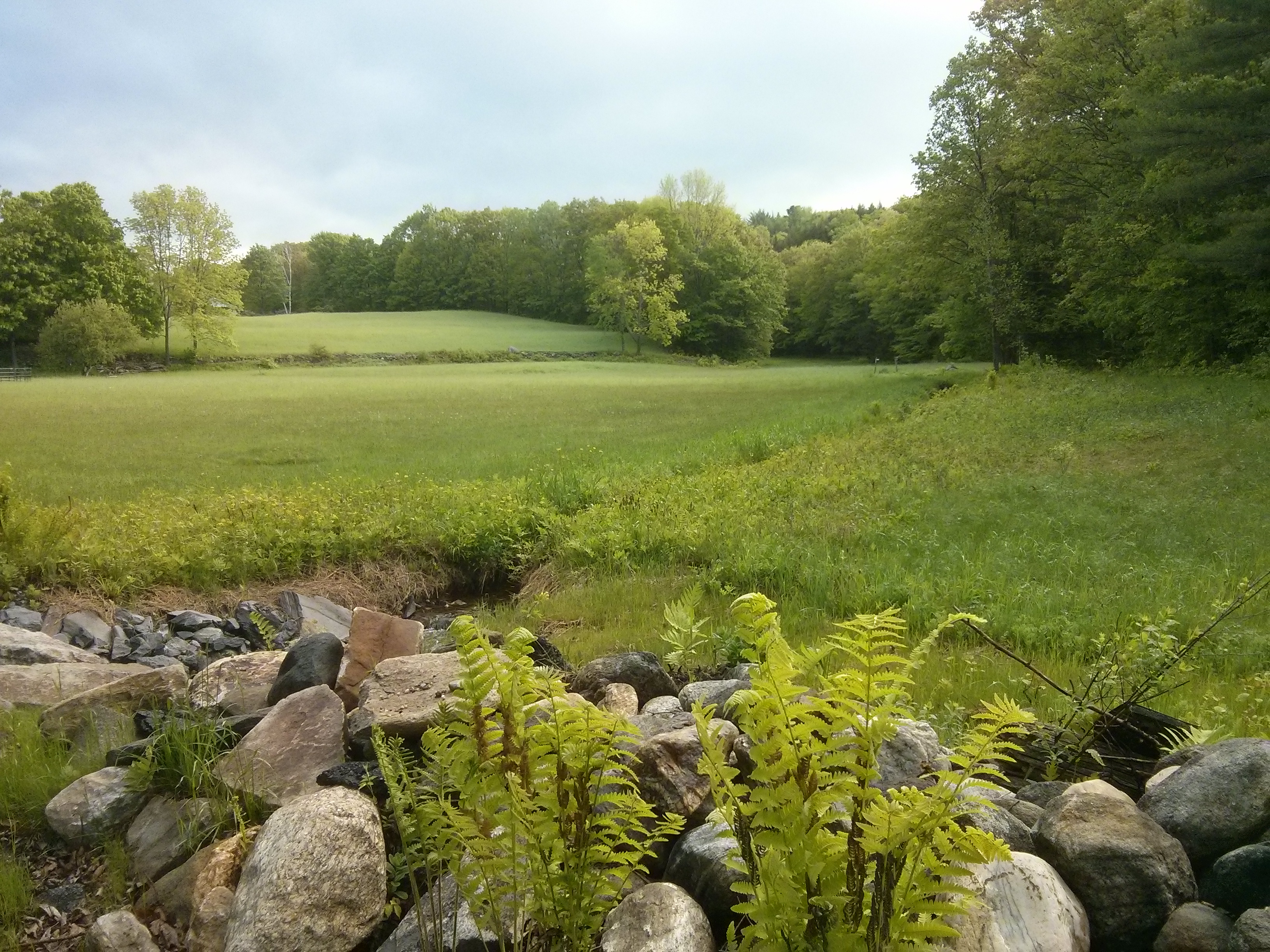
I take time for beauty. On my hour bike ride in the morning I am struck again and again how my lines have fallen in pleasant places. Every lovely view connects to memories of vacations in the country when I was growing up. Now I live in vacation land. Its loveliness feeds my soul; I find myself deeply relaxing into the beauty of this landscape. Every flower garden I pass delights me, because I find another kindred spirit–a gardener fighting back against the penury of winter with the lavish color of the living. 

Summer is a different season in the life of the homeschooling mother. I want to make the most of it. I heartily concur with the author of Three Ways to Completely Screw Up Your Summer. Here’s another one, about taking time to behold Truth, Beauty, and Goodness

May your summer refresh you, bless you, and restore your soul.


Posted in Stories of Home | Leave a comment

The Sweet Grace of “Trim Healthy Mama”

My copy of Trim Healthy Mama arrived this week and I have been reading it as fast as I can. Having read my share of diet books, I know the grammar and can maneuver through the terrain pretty quickly.

What is the premise? You have to manage insulin in the blood to lose weight.

How do you do that? Keep fat and carbs in separate meals.

What do I have to do? Eat protein and healthy fats, with veggies, for a Satisfying (S) meal. Eat Protein and 45 g or less of healthy carbs, with veggies, for an Energizing (E) meal. Occasionally protein with low carb and low fat, for a Fuel Pull (FP).

What is the schedule? How do I plan? How long will I be on this diet? No schedule–except make sure there are three hours between meals or snacks when you switch between E and S. Fat or carbs in bloodstream, not both. Plan yummy meals through the day or week, making sure you have both kinds of meals. You learn the basics and decide day to day how you are going to make this work for you.

I like this, because I really do lean more toward improvisation than a script. But those who want more structure can find it too.

Secrets? Good quality stevia to sweeten the plentiful desserts. “Muffin in a Mug” made of an egg, ground flax seed, almond flour, coconut oil, and cocoa in coffee mug, microwaved for 1 minute. Butter on vegetables. Coconut oil. Frozen berries. Salmon!

This book was written by two sisters whose stories give them credibility.  They know their stuff, having tried every way of food lifestyle out there. Their sources are familiar to me: Nourishing Traditions, Weston Price, Dr. Schwarzbein. They reference many, many studies. I give them credit for this. They also go extensively into hormone issues. This hefty book covers a lot. I find it worth the $35 price tag.

I have to say I have tried stevia before and hated it, and was skeptical of using it to replace all sugar. But I have abused sugar for a long time and it is time for penance.  They list the best stevias out there and apparently have become a source for it. I purchased some from their website before I got the book so I had it on hand as soon as I read some good looking recipes. I have been using it for about five days and I definitely notice I am calmer without the sugar in my system. It leaves an aftertaste but their brand does not have that nasty bitter chemical taste I have tasted before. It isn’t as smooth as sugar but it will do.

One of the things I love about this book is the natural voice of the sisters. One is a food purist and tells the truth even if it hurts, and the other allows some shortcuts and extends grace for those who may need to make some adaptations. Grace and truth. Where have we seen that before? They encourage the reader to work with it for a couple of months to master the S and E meals after which they have lots of ideas for ratcheting it up a notch.

There is oh so much more to this that I find helpful and encouraging. I will live with it for a while and post from time to time. Have any of my readers worked with this way of eating? Post a comment and let me know what you thought of it.

Posted in Healthy Living, Stories of Home | Tagged , , , , , , , , , , | Leave a comment

Nourishing our Soul with Fairy Tales

Abolition of Man by C.S. Lewis quotes Augustine in the Chapter “Men without Chests”. He writes, “St. Augustine defines virtue as ordo amoris, the ordinate condition of the affections in which every object is accorded that kind and degree of love which is appropriate to it. Aristotle says that the aim of education is to make the pupil like and dislike what he ought.” [Lewis 26]

We do this by training more than the rational part of our personhood but also the soul, where emotions, imagination, and worship lie. We do this through stories: history, myths, fairy tales. I think fairy tales are underrated! Fairy tales have a way of sticking around.

We had company on Friday night and after a jam session with a beautiful violin, electric bass, and an out of tune piano, we two mothers and our two twenty-year-olds got to talking about books and movies. My son surprised me by retelling a fairy tale he read as a youth, in order to make a point. This story, which I do not remember reading to him, planted a strong lesson of virtue he still remembers. Fairy tales have a unique way of explaining the way of the world and moving us to virtue. Think of the ubiquitous helpless old lady who is scorned by the privileged in the stories, but helped by the one of humble means.  By the story’s end, the order is turned upside down and the humble one is raised in glory while the proud is brought low. The youngest one receives the throne. The “foolish” one solves the problem and wins the princess. Cinderella marries the prince.

One of my favorite fairy tales is by Howard Pyle in The Wonder Clock. The princess is too proud to condescend to any of her suitors and she treats them harshly. One day a shabby man begs for a job and becomes the gooseherd. He attracts the notice of the princess who covets his three shiny baubles. She insists on having them and one by one trades for them her kerchief, her necklace, and finally, five-and-twenty kisses. Her father sees this last exchange and in anger marries them on the spot and kicks her out. The beggar grumbles about being saddled with a useless wife but takes her home.

One day he tells her to take the eggs to market to sell. She does go, but her eggs are trampled when a tipsy countryman knocks them to the ground. A basket of apples is next but a passing swineherd bumps into her and the pigs eat every one. Lastly, he sends her to work in the kitchen at the castle because the king will celebrate his marriage today and she can bring some scraps home for dinner.

But as she leaves the castle she is stopped by two soldiers, who say she must come with them. She hastily throws her apron over the basket of scraps as they march her before the king. She stands there before the gold-crowned king, trembling with fright. He asks what is under her apron. When she doesn’t answer, someone pulls the apron aside to reveal the kitchen scraps. She hangs her head in deepest shame.

But the king comes down beside her and reveals himself as the gooseherd, the tipsy countryman, and the swineherd. Her pride is broken and he raises her up to sit beside him, for today he celebrates his marriage to her.

And we learn so much, not the least of which is that things are not what they appear. There may be more to our story than we realize: that the pain we suffer has meaning, and that our growth in virtue is the point of it all.

So I say, let’s nourish the souls of our children with fairy tales!


Lewis, C. S.. Abolition of Man. Macmillan Publishing. New York.1947.


Posted in Stories of Home | Tagged , , , , , , , , | Leave a comment

Planting Poetry

I choose a poem each week to read to my Challenge B students. My choices range in style but each must do something beautiful with words and have content that connects to my teens.  About half have been Robert Frost, because as New Englanders they should be well acquainted with his quintessential New England voice.

I came across this passage in an article put out by the Circe writers: http://www.circeinstitute.org/blog/garden-poetry-why-i-want-english-class-garden

In my English classes, I open each class period with a spirited reading and reflection of a poem. Beginning our learning time together with a poem is like a fastidious and thorough stretch; or like a first cup of fine organic coffee; or even like the sun’s rays spilling over the Chesapeake Bay Bridge on a crisp, fall morning. You cannot believe you are driving across that bridge, at just that perfect time. How did you find yourself there?

Yes, yes–this is why I read to my students!

Posted in Stories of Home | Tagged , , , , , , , | Leave a comment

Pork Pie for Lunch on Pi Day

Pork Pie for Lunch on Pi Day

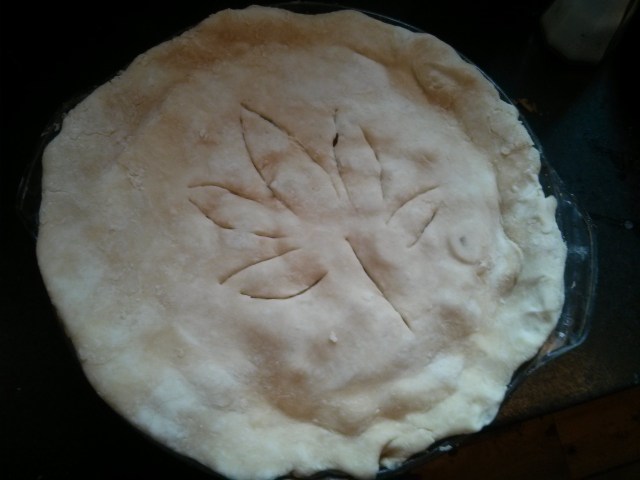
My daughter carved a leaf on the crust to remind us it is a pork pot pie. I assure you, no cannabis in it. I will bake it later this morning when we study Latin. The crust isn’t gluten free, so I set some aside for myself.

Posted in Stories of Home | Tagged , | Leave a comment

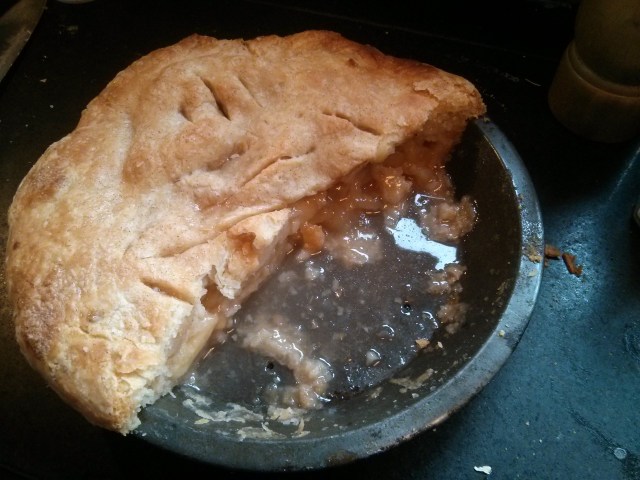
Pie for breakfast on Pi Day 2014

Pie for breakfast on Pi Day 2014

Apple Pie

Posted in Stories of Home | Tagged , | Leave a comment