
“Sophia!” said Walker. “Why aren’t you coming?”
“Oh Walker,” she said, “I have to keep going. I never told you –because, by the way, you never asked– that I have a mission from the King.”
This is how Sophia’s journey began.
Sophia heard about her cousin Mark’s accident when she found her mother crying. His back broke in a fall and he was paralyzed. When Sophia heard that Mark’s best friend had taken him to the old mines, where they were forbidden to go, she was angry. When she learned that the boy didn’t even visit Mark now, she was disgusted.
Day and night she imagined painful punishments. She could lure him to the mine shaft and push him in. “How do you like it?” she would gloat.
Maybe she could confront him and yell at him till he fell to her feet sobbing, “I’m sorry, I’m sorry,” and she would just walk away.
Or he would get terribly sick with a disease that kept him in bed and she would come over and say, “It serves you right!”
She became bitter over the months that followed and her schoolmates commented on it. “You’re not fun anymore. We don’t want to play with you.” She didn’t care.
Her mother pulled her aside one day and said, “Sophia, no punishment will make Mark walk again. It is time to forgive.” But she could not.
One day she came home from school and found an unkempt man hunched at the kitchen table. His dusty clothes hung too big on him as if he had recently lost a lot of weight.
“The King,” he was babbling. “I need to see the King. Darkness all around. A little further…I must get to him.” Holding his head, he cried out, “It hurts! Need to find a healer. Can’t… can’t remember.”
Sophia’s mother said in concern, “He’s been like this since I found him stumbling in the road. I brought him home.” She placed before him a bowl of beef broth. He spooned it absently. She got the guest room ready while he finished and afterward put him to bed.
“What’s wrong with him, Mama?” Sophia asked, when she came back to the kitchen.
“I’m not sure, Sophie,” she answered. “He seems to be broken somehow. Will you help me take care of him until he is better?”
“Sure,” said Sophia.
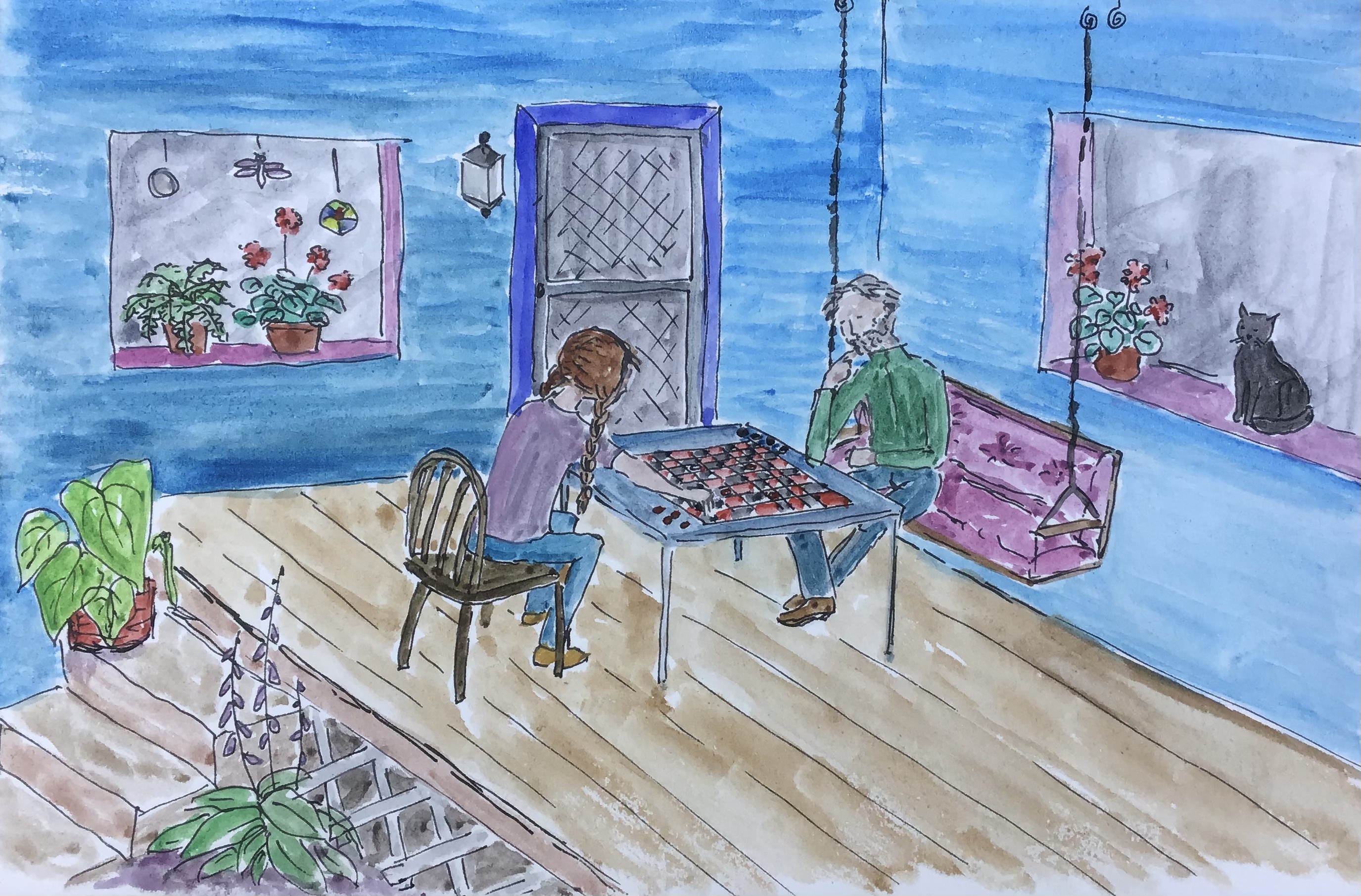
At first he drank only clear soup and slept. But at the end of the week he sat out on the porch in the sun, wrapped in a blanket.
“Hello,” said Sophia, sitting next to him on the porch swing. “What’s your name?”
“I…” He shook his head in confusion. “I don’t know,” he said.
After that she often sat with him. They played checkers. He asked her to read The Letters to him, which always seemed to calm him. She looked forward to seeing him after school. They became special friends and she named him Uncle David.
One evening he cried out, “O my son! My son, my son!”
Sophia leaned over and took his hand in hers. “Uncle David, what is it?“
“He—is hurt, I think. Where is he? Why isn’t he with me?” he said in growing agitation. “My son! I will always, always love my son. The day he was born he could fit in one hand. I still feel him pressed in my palm. He’s my little boy. He is suffering.” He rubbed his eyes with the heels of his hands. “I can’t remember. I can’t remember!”
That night Sophia walked to the river, where the rising moon glistened on the water. She spoke aloud, “Maker, please help Uncle David. He needs a healer.”
But she felt the Maker say, “Why are you fighting me?”
“How am I fighting you?” she asked in surprise.
“You cry out for the boy who hurt your cousin to be punished. I want to show him mercy. Why should I answer your prayer?”
“Uncle David needs you! He’s my friend. He’s hurt!” She burst into tears. “Please help him, Maker.”
“Release me to bless the one who hurt you.”
She tensed as she thought back to her anger. But her desire for revenge seemed small and ugly next to the compassion she saw in Uncle David and the Maker. She was tired of the burden of it. She blew out her breath and sniffled.
“I do,” she said and immediately felt a heat radiating from her heart that burned up the bitterness and left a deep peace.
“It is done,” he said.
“And then I felt him say,” concluded Sophia, “‘Now, my love, go seek the healer.’”

 Letters from Heart's Content